Table of contents
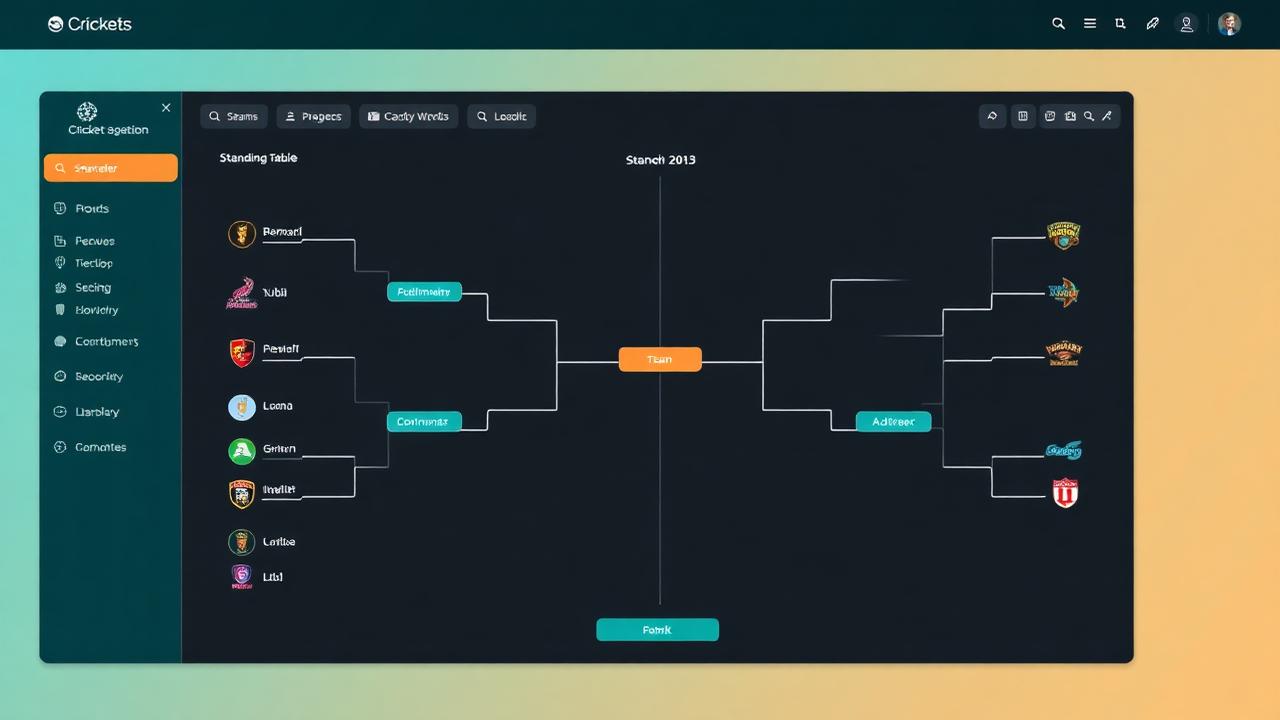
Planning a tournament schedule by hand often leads to clashing match times, unfair turnaround intervals, and disputed points tables. A dedicated cricket fixture generator automates this process by producing balanced match schedules, assigning venues, and automatically calculating standings in real time. Whether you run a weekend tape-ball league, an evening T10 night tournament, or a multi-division club championship, using automated tournament tools eliminates scheduling errors and ensures every team gets a fair route through the competition.
Quick answer: What is a cricket fixture generator?
A cricket fixture generator is a specialized scheduling engine and tournament management tool that accepts your team list, ground availability, and competition format to automatically create a balanced match timetable. Beyond generating dates and pairings, modern tools like Run & Ball track ball-by-ball scores, resolve tie-breaks, automatically calculate Net Run Rate (how NRR works), and adjust standings the moment a match concludes.
Why modern tournaments need an automated fixture generator
Pen-and-paper brackets and static spreadsheet templates have long been the fallback for grassroots cricket organizers. However, as tournaments grow beyond four or six teams, manual scheduling quickly breaks down under practical real-world constraints:
- Rest time discrepancies: In manual round-robin draws, one team might end up playing back-to-back matches while an opponent enters fresh after a two-hour rest.
- Venue and slot collisions: When sharing pitches across multiple games—common in tape-ball and club weekend tournaments—overlapping over rates create venue logjams.
- Calculation errors in tie-breakers: Manually updating runs scored and overs faced across multiple matches inevitably produces disputes during qualification stages.
- Weather and match delays: A sudden rain delay or wet outfield forces schedule revisions. Manually rewriting entire knockout brackets or group pairings takes hours.
An automated tournament engine accounts for ground slots, turnaround limits, and group balance instantly. Organizers can focus on logistics and umpiring rather than recalculating runs and overs deep into the night.
Common tournament formats supported by fixture generators
Different competitions demand distinct structural formats depending on calendar length, available grounds, and team counts. A capable cricket fixture generator handles all standard tournament brackets:
1. Single round-robin (all-play-all)
Every team plays every other team once. This format provides the fairest reflection of overall form because one bad over or unlucky dismissal does not eliminate a strong side.
- Formula for total matches: `N * (N - 1) / 2`, where `N` is the number of teams.
- Best for: Leagues with 4 to 8 teams running across several weekends or weeks.
- Points structure: Typically 2 points for a win, 1 for a tie or no-result, 0 for a loss, with ties broken by Net Run Rate.
2. Double round-robin
Teams face each other home-and-away or twice across neutral grounds. Double round-robins neutralize the toss advantage, particularly at grounds where dew heavily favors the chasing team during evening fixtures.
- Formula for total matches: `N * (N - 1)`.
- Best for: Premier club divisions and corporate weekend seasons running across several months.
3. Knockout (single elimination)
Losers are eliminated immediately, halving the field after each round until the final.
- Formula for total matches: `N - 1`.
- Best for: Weekend tape-ball festivals, single-day tournaments, and knockout cup competitions with strict time windows.
- Seeding consideration: Strong fixture tools seed top teams into separate halves of the bracket to avoid premature match-ups between title contenders.
4. Group stage with playoffs (World Cup and IPL styles)
Teams are divided into pools (for example, two groups of four or five teams). Top performers from each group advance to a knockout stage, such as a traditional semi-final or the Page-Playoff system (Qualifier 1, Eliminator, Qualifier 2, Final).
- Best for: Mid-sized tournaments (8 to 16 teams) looking to balance guaranteed games per team with an exciting knockout finale.
5. Double elimination
A team must lose twice before being knocked out of the competition. Teams that lose their first fixture drop into a secondary "losers' bracket," creating a second route to the final.
- Best for: Esports and intensive short-format tournaments (like F5 or box cricket) where every participant travels for guaranteed competitive cricket.
How to generate cricket fixtures step-by-step
Setting up a complete tournament schedule on Run & Ball takes only a few minutes. Follow these practical steps to build, schedule, and launch your fixtures:
Step 1: Define tournament rules and format
Before entering team names, establish the structural rules governing your competition:
- Format type: Hardball, tape ball, box, or tennis ball cricket.
- Innings length: F5 (5 overs), T10, T20, or custom over limits.
- Competition structure: Round robin, knockout, or multi-group playoffs.
- Points allocation: Points awarded for wins, draws, ties, and abandoned matches.
Step 2: Input your teams and seedings
Enter team rosters directly into the platform. You can type team names manually or paste a roster list. If your tournament features returning champions or ranked league squads, assign seedings so that the fixture generator separates the top contenders into balanced pools.
Step 3: Configure venue and time constraints
Specify available match days, pitch numbers, start times, and expected match durations (for instance, 90 minutes for a T10 double-header, or 3.5 hours for a standard T20). A reliable schedule engine automatically spaces out fixtures, ensuring teams do not face immediate back-to-back games unless unavoidable.
Step 4: Generate the fixture schedule
Click generate to create the full tournament schedule. Review the resulting draft to verify pitch allocations, rest intervals, and group balance. If a local restriction arises—such as a team arriving late due to travel—you can swap slots manually without breaking the underlying points table logic.
Step 5: Publish the live schedule
Once confirmed, share the live tournament link with team captains, players, and supporters. Participating clubs can see their fixtures, reporting times, ground numbers, and head-to-head records directly on their mobile devices.
Why teams choose Run & Ball as their cricket fixture generator
Run & Ball was engineered specifically for the practical realities of cricket across Pakistan, India, the UAE, and the global grassroots community. Most legacy sports management systems are desktop-bound, expensive, and designed strictly for long-form weekend club cricket. Run & Ball offers a flexible, modern mobile-first alternative:
- Works fully offline: Score full innings without an active internet connection. The moment your phone reconnects to mobile data or Wi-Fi, the entire fixture table and stats sync automatically.
- Built for every format: Complete native support for tape ball, gully cricket, F5, T10, T20, and traditional multi-day formats. Over limits, powerplays, and bowling restrictions adapt to your chosen rules.
- Free to start: No per-match fees, registration hurdles, or mandatory club subscriptions to generate brackets or score matches.
- Auto-updating points tables: Standings, completed matches, run differentials, and Net Run Rates recalculate automatically after every submitted scorecard.
- Broadcast-ready live overlays: Stream your matches to YouTube, Facebook, or OBS with professional score bugs, wagon wheels, and batter cards.
- AI commentary and match predictor: Bring elite broadcast atmosphere to grassroots grounds with automated commentary feeds and real-time win-probability projections.
Advanced fixture management: Handling rain, byes, and tie-breakers
A fixture generator must do more than simply print a clean schedule; it must handle unexpected disruptions smoothly during tournament play.
Managing odd team counts (byes)
When an odd number of teams enters a round-robin schedule (e.g., 5, 7, or 9 teams), one team must sit out during each round. Standard fixture algorithms use the Berger pairing system (or rotating polygon method) to distribute byes evenly, ensuring no single team receives multiple byes while others play continuously.
Washouts and abandoned matches
When rain interrupts play, organizers face two choices: rescheduling or splitting points. Run & Ball allows scorers to record matches as "Abandoned" or "No Result" with a single tap, cleanly splitting points and updating the standings without penalizing either team's Net Run Rate.
Net Run Rate calculation in fixture standings
In tournament play, Net Run Rate (NRR) serves as the primary tie-breaker when teams finish level on match points. The official calculation follows standard ICC tournament principles:
`NRR = (Total Runs Scored / Total Overs Faced) - (Total Runs Conceded / Total Overs Bowled)`
Crucially, if a team is bowled out inside its allocated overs, the calculation counts the full quota of overs (e.g., 20 overs in a T20, not 14.2 overs). Automated tournament management ensures these calculations happen instantly and accurately, avoiding manual arithmetic disputes at the end of group stages.
Practical tips for tournament directors
To ensure your tournament runs smoothly from the opening ball to the trophy presentation, keep these operational tips in mind:
- Build buffer slots into knockout rounds: If you are running multiple T10 or T20 games on one ground, allocate an extra 15 to 20 minutes between fixtures to account for innings changes, super overs, or boundary checks.
- Lock rosters before the first ball: Require captains to submit their final squads inside the app prior to the toss to prevent unregistered ringers from playing in knockout matches.
- Share the live URL early: Distribute the live fixture page on community WhatsApp groups and social channels so players track schedule adjustments in real time without calling tournament directors.
- Assign backup scorers: Use the app's multi-scorer capability or offline mode so that a phone battery failure does not interrupt live scoring.
Related tournament resources on Run & Ball
Organizing a competitive league requires coordination across scheduling, streaming, and player administration. Explore these dedicated guides to refine your tournament setup:
- How to organize a cricket tournament
- How to live stream a cricket match
- Cricket tournament checklist
- Browse all live matches · Open the player directory
- Cricket Tournament Software
- Cricket Tournament Management System
- Cricket League Management Software
- Cricket Tournament Planner
- Cricket Tournament Organizer
Official references and standards
Whether you are managing a 32-team tape-ball cup or a regional cricket league, automated scheduling keeps your event professional, fair, and on time.
Free tournament templates
CSV templates you can open in Excel, Google Sheets or Numbers. Ready-made for round-robin fixtures, points tables with NRR, scorecards and roster sheets.
Manage your next cricket tournament with Run & Ball
- Live ball-by-ball scoring
- Auto fixtures & points table
- Player & team stats
- Free forever
People also ask
Reader comments(0)

Ready to run your next cricket tournament?
Score matches ball-by-ball, run fixtures, points tables and playoffs, and stream to OBS — all free from one phone.
Related articles
- Tournament Management
Cricket Tournament Software: The Complete 2026 Guide
Compare the best cricket tournament software in 2026. Fixtures, points table, NRR, live scoring and streaming — all in one free app.
- Tournament Management
Cricket Tournament Management System — Run a League Solo
A complete cricket tournament management system: fixtures, points, NRR, playoffs, posters and live scoring in one free mobile app.
- Tournament Management
Cricket League Management Software — Free Tool & Guide | Run & Ball
Cricket League Management Software: how Run & Ball gives you a free, mobile-first cricket league management software for clubs, schools, academies and local cricket leagues.
- Tournament Management
Cricket Schedule Generator — Free Tool & Guide | Run & Ball
Cricket Schedule Generator: how Run & Ball gives you a free, mobile-first cricket schedule generator for clubs, schools, academies and local cricket leagues.
- Tournament Management
Cricket Tournament Planner — Free Tool & Guide | Run & Ball
Cricket Tournament Planner: how Run & Ball gives you a free, mobile-first cricket tournament planner for clubs, schools, academies and local cricket leagues.
- Tournament Management
Cricket Tournament Organizer — Free Tool & Guide | Run & Ball
Cricket Tournament Organizer: how Run & Ball gives you a free, mobile-first cricket tournament organizer for clubs, schools, academies and local cricket leagues.