Table of contents
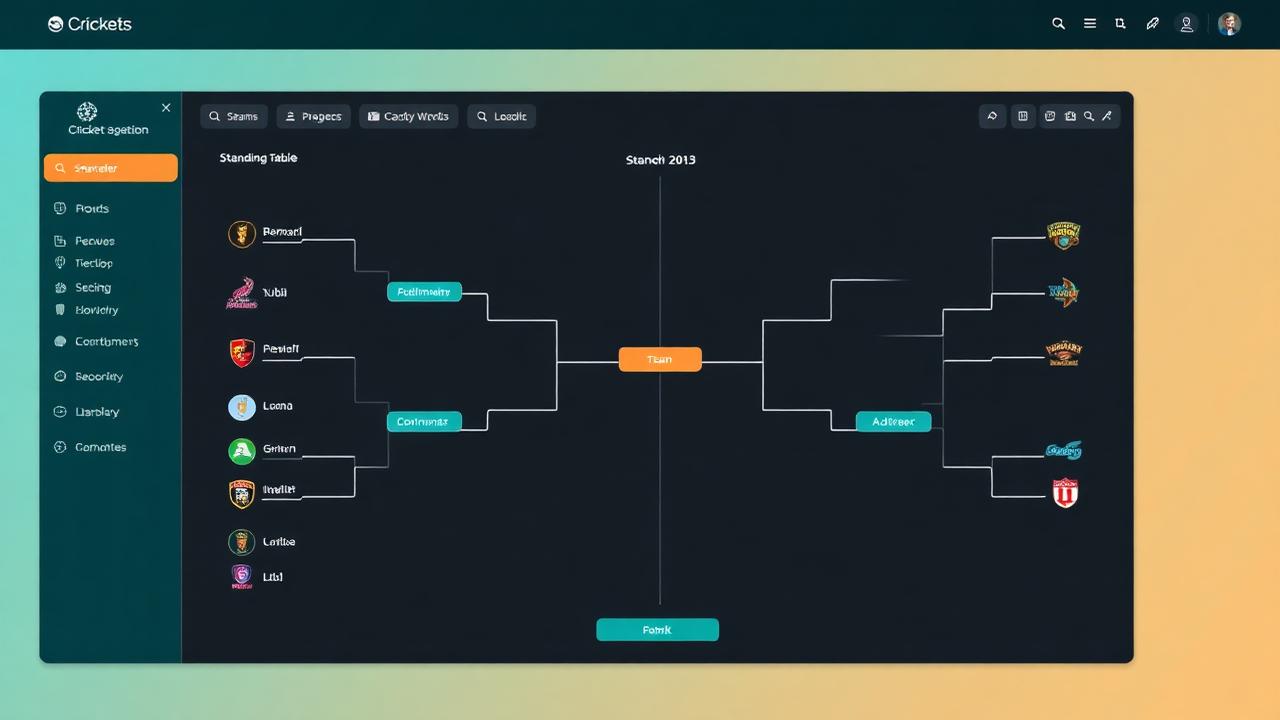
Running a competitive cricket competition requires coordinated scheduling, accurate match tracking, and timely communication with players and fans. An online tournament management system replaces disorganized spreadsheets, physical scorebooks, and frantic phone calls with a centralized digital platform. Whether you run a weekend tape-ball league, a corporate T10 cup, or a multi-division hardball championship, modern tournament platforms handle the administrative burden so organizers can focus on the sport.
With Run & Ball, cricket organizers get an offline-first, mobile-ready online tournament management system tailored to real-world playing conditions across Pakistan, India, the UAE, and global cricket communities.
Quick Answer: What Does an Online Tournament Management System Do?
An online tournament management system automates the core operational stages of a sports competition:
- Registration and Team Rostering: Collects squad lists, verifies player eligibility, and logs career profiles.
- Fixture Generation: Creates balanced schedules across single-elimination, double-elimination, round-robin, and hybrid group stages.
- Digital Ball-by-Ball Scoring: Replaces paper scorebooks with responsive, tap-to-score mobile interfaces that handle extras, dismissals, and revised targets.
- Standings and Tiebreakers: Automatically recalculates points, bonus points, and Net Run Rate (NRR) the moment a match concludes.
- Live Fan Engagement: Broadcasts real-time scorecards, streaming graphics, and statistical leaderboards to supporters anywhere in the world.
---
Why Modern Cricket Demands Digital Tournament Operations
Organizing cricket presents unique operational hurdles rarely found in other team sports. Match durations vary, weather disruptions alter target equations, and individual player performance statistics (strike rates, economy rates, bowling averages) require careful mathematical tracking.
Relying on manual tools like paper scorecards or generic spreadsheets leads to common administrative failures:
- Calculation Errors in Standings: Manual Net Run Rate calculations often contain rounding mistakes or misapplied overs when teams are bowled out within their allotted quota.
- Delayed Information Flow: Players, team captains, and local fans often wait hours after a match to see official table updates and playoff qualification scenarios.
- Scorebook Loss or Damage: Grassroots matches played in dusty open grounds, unexpected rain, or breezy outdoor conditions risk damaged or lost physical records.
- Lack of Long-Term Records: Without a unified database, individual match performances disappear as soon as the tournament concludes, leaving players without verified career statistics.
A cloud-connected online tournament management system eliminates these friction points by synchronizing every ball bowled directly into standings tables, player records, and fixture trackers.
---
Key Features of a Modern Online Tournament Management System
To effectively manage cricket at any level, your software must be built specifically for the nuances of the game rather than serving as a generic bracket builder.
1. Flexible Fixture and Bracket Engine
Tournament formats must match the time constraints and venue availability of the organizers. A dependable system supports:
- Round-Robin Groups: Ideal for community leagues where every team needs guaranteed playing time.
- Knockout Brackets: Traditional single-elimination formats suited for fast-paced weekend tournaments.
- Group Stage with Knockout Playoffs: Top seeds advance to quarter-finals, semi-finals, or Page playoff systems (Qualifier 1, Eliminator, Qualifier 2).
- Custom Scheduling Constraints: Managing ground availability, rest days, double-headers, and day/night slot allocations.
If you are setting up complex match dates, pairing an online system with a dedicated cricket fixture generator helps ensure fair rest intervals between games.
2. Ball-by-Ball Scoring with Cricket Rule Logic
Scoring must be intuitive enough for a volunteer or substitute player to handle on a mobile phone without formal training. The platform must accurately process:
- Wides, no-balls, leg byes, byes, and penalty runs.
- Run-outs at either end, retired hurt, and stumping decisions.
- Bowler over quotas and fielding restrictions per powerplay phase.
- Rain-interrupted games using standardized mathematical adjustments like the ICC official rules and playing conditions or simplified local target calculations.
3. Automated Net Run Rate (NRR) and Tiebreakers
Net Run Rate is the universal tiebreaker in limited-overs cricket, yet it remains one of the most frequently misunderstood calculations. When a team is bowled out, the calculation must use their full quota of overs, not just the overs they survived. An automated system eliminates manual arithmetic errors. For a full breakdown of how these formulas work behind the scenes, read our guide on how to calculate Net Run Rate.
4. Offline-First Mobile Capabilities
Grassroots cricket matches are rarely played in venues with enterprise-grade Wi-Fi. Ground-level internet connectivity in suburban or rural sports complexes is frequently spotty. A resilient online tournament management system allows scorers to record balls completely offline, caching the match state locally on the device and syncing records seamlessly to the server once a network connection is restored.
5. Broadcast Overlays and Audience Streaming
Live streaming has shifted from a luxury reserved for televised leagues to a standard expectation for club and tape-ball tournaments. Direct integration between scoring data and Open Broadcaster Software (OBS) allows organizers to display real-time lower-third graphics, batsman summary cards, and target trackers without paying for expensive broadcast hardware. If you are preparing your first broadcast, check out our guide on how to live stream a cricket match.
---
Step-by-Step: How to Run a Cricket Tournament Online
Setting up an organized tournament does not require administrative software expertise. Here is a practical, step-by-step workflow for launching your competition.
Step 1: Define Tournament Parameters and Regulations
Before touching the software, lock down the core sporting variables:
- Match length: Traditional T20, fast T10, 8-over blast, or F5 (five-over tape-ball matches).
- Ball type: Leather hardball, heavy tape ball, or tennis ball.
- Points allocation: Points awarded for wins, ties, no-results, or walkovers.
- Squad restrictions: Maximum roster size, transfer windows, and guest player limits.
To ensure no administrative detail slips through the cracks before launch, review our printable cricket tournament checklist.
Step 2: Register Teams and Player Rosters
Create the tournament within the platform and share the registration portal with team managers.
- Collect accurate player details, playing roles (batter, bowler, all-rounder, wicket-keeper), and contact information.
- Use team self-management tools so captains can input their own lineups, saving the tournament committee hours of manual typing.
- Search existing profiles in the player directory to preserve historical data across seasons.
Step 3: Generate the Fixture Schedule
Input the participating teams into the draw engine.
- Assign venues, pitches, and start times.
- Define group allocations (e.g., Group A and Group B) or seed teams to avoid top contenders meeting in the preliminary round.
- Publish the live match schedule online so umpires, players, and spectators have a permanent reference link.
Step 4: Manage Match-Day Operations and Scoring
Assign verified scorers to each fixture.
- Conduct the toss directly inside the app, recording the decision (bat or bowl).
- Confirm starting XI lineups, including designated wicket-keepers and captains.
- Score each delivery in real-time. If an error occurs, use instant undo features to amend a miscounted extra or an incorrect batsman assignment without corrupting the match ledger.
Step 5: Automate Standings and Stage Progression
As soon as the final wicket falls or target runs are reached:
- The match closes automatically, finalizing individual player strike rates and bowling figures.
- The leaderboard updates instantly, adjusting games played, points, and NRR.
- Top-seeded teams automatically populate the designated playoff or semi-final brackets, removing disputes over qualification.
---
Accommodating Diverse Cricket Formats: From Gully to Hardball
A major limitation of traditional sports management software is a rigid adherence to multi-day or standard 50-over hardball formats. Real-world cricket is far more diverse.
+--------------------------------------------------------------------+
|                Modern Cricket Competition Formats                  |
+--------------------+-----------------------+-----------------------+
| Format             | Key Rules             | Software Needs        |
+--------------------+-----------------------+-----------------------+
| F5 / Tape-Ball     | 5 overs, 1-over max   | Fast tap-scoring,     |
|                    | per bowler, fast run  | instant strike-rate   |
|                    | rates                 | tracking              |
+--------------------+-----------------------+-----------------------+
| T10 / T20          | Powerplays, standard  | NRR automation,       |
|                    | fielding restrictions | DLS rain calculations |
+--------------------+-----------------------+-----------------------+
| Multi-Day / Club   | 2 innings, declarations| Over rates, follow-on |
|                    | follow-on rules       | tracking, maiden overs|
+--------------------+-----------------------+-----------------------+
An adaptable platform handles these localized dynamics effortlessly:
- Tape-Ball and Short Formats: F5 and T10 matches involve rapid scoring, high strike rates, and strict per-bowler over limits. Scoring must keep pace with balls bowled every 20 seconds.
- Custom Over Rules: Grassroots games often implement 2-over limits per bowler in 8-over fixtures or customized powerplay conditions.
- Historical Parallels: From casual weekend matches to international records tracked by ESPNcricinfo statistics & records, having reliable ball-by-ball precision gives amateur cricketers the same dignity of statistical tracking enjoyed at professional levels. For more background on the historical structure of organized leagues, see cricket on Wikipedia.
---
Engaging Fans, Sponsors, and Local Communities
An online tournament management system does not just serve the scorers' table—it acts as the digital storefront for your competition.
- Real-Time Match Center: Spectators who cannot attend in person can track ball-by-ball updates from any smartphone by visiting the browse all live matches section.
- Sponsor Visibility: Modern systems display sponsor logos on digital scorecards, broadcast overlays, and fixture tables, providing verifiable impressions for commercial partners.
- Career Portfolios for Aspiring Athletes: Young players building resumes for club trials or district selections can point to permanent, verified digital scorecards that record their career fifties, five-wicket hauls, and economy metrics.
If you are expanding an ongoing league, integrating specialized tools like cricket league management software or a dedicated cricket tournament planner ensures long-term operational sustainability.
---
Getting Started with Run & Ball
Modern cricket administration should not be trapped in paper books or restricted behind expensive licensing fees. Whether you are running a single-day knockout cup or an extensive seasonal competition, Run & Ball delivers the tools required to organize, score, and broadcast your matches effortlessly.
- Open Run & Ball on your mobile device or desktop browser.
- Set up your tournament, establish your format, and build team rosters.
- Keep score ball-by-ball, online or offline, and share live updates with your entire sporting community.
To set up your next competition today, visit start a free tournament and experience modern cricket administration.
---
Related Guides & Tournament Resources
Free tournament templates
CSV templates you can open in Excel, Google Sheets or Numbers. Ready-made for round-robin fixtures, points tables with NRR, scorecards and roster sheets.
Manage your next cricket tournament with Run & Ball
- Live ball-by-ball scoring
- Auto fixtures & points table
- Player & team stats
- Free forever
People also ask
Reader comments(0)

Ready to run your next cricket tournament?
Score matches ball-by-ball, run fixtures, points tables and playoffs, and stream to OBS — all free from one phone.
Related articles
- Tournament Management
Cricket Tournament Software: The Complete 2026 Guide
Compare the best cricket tournament software in 2026. Fixtures, points table, NRR, live scoring and streaming — all in one free app.
- Tournament Management
Cricket Tournament Management System — Run a League Solo
A complete cricket tournament management system: fixtures, points, NRR, playoffs, posters and live scoring in one free mobile app.
- Tournament Management
Cricket League Management Software — Free Tool & Guide | Run & Ball
Cricket League Management Software: how Run & Ball gives you a free, mobile-first cricket league management software for clubs, schools, academies and local cricket leagues.
- Tournament Management
Cricket Fixture Generator — Free Tool & Guide | Run & Ball
Cricket Fixture Generator: how Run & Ball gives you a free, mobile-first cricket fixture generator for clubs, schools, academies and local cricket leagues.
- Tournament Management
Cricket Schedule Generator — Free Tool & Guide | Run & Ball
Cricket Schedule Generator: how Run & Ball gives you a free, mobile-first cricket schedule generator for clubs, schools, academies and local cricket leagues.
- Tournament Management
Cricket Tournament Planner — Free Tool & Guide | Run & Ball
Cricket Tournament Planner: how Run & Ball gives you a free, mobile-first cricket tournament planner for clubs, schools, academies and local cricket leagues.