Table of contents
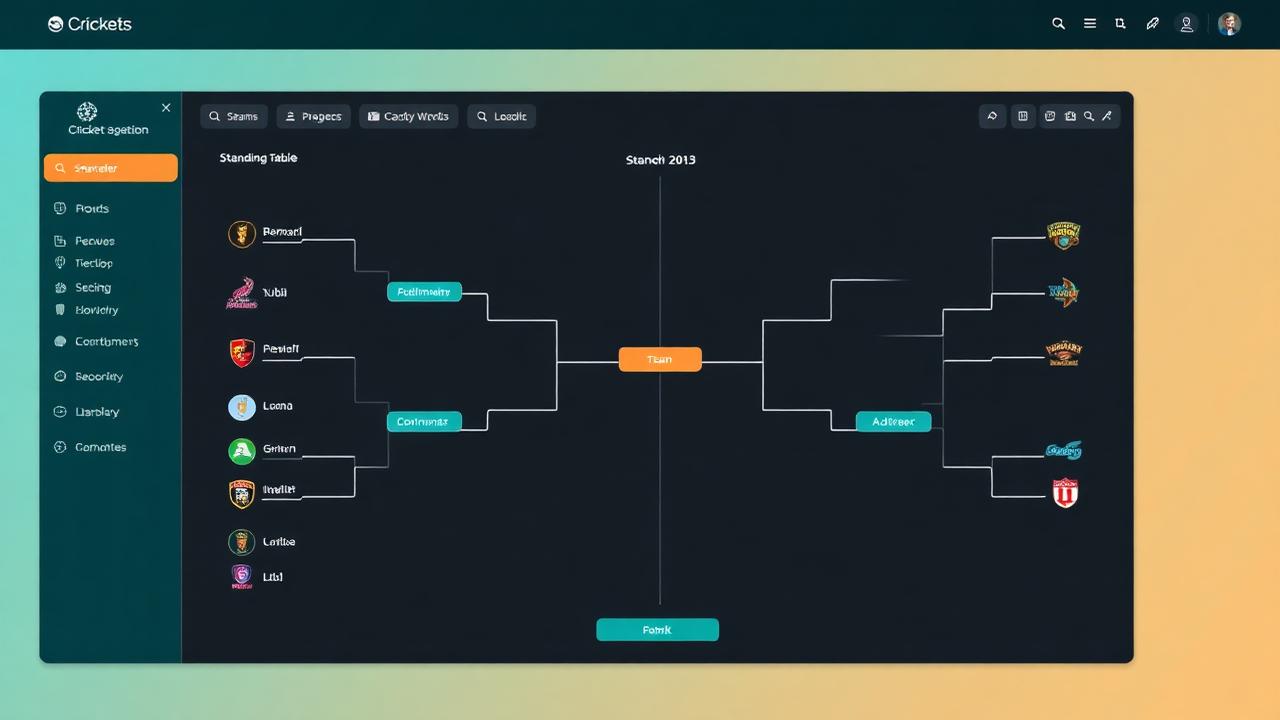
Managing fixtures for a league or weekend tournament can quickly become chaotic without a reliable cricket match scheduler. Between juggling venue availability, weather delays, overlapping team rosters, and custom over limits, manual spreadsheets often lead to frustrating scheduling clashes and delayed starts.
Whether you are coordinating an 8-team weekend tape-ball knockout in Karachi, an inter-corporate T20 tournament in Dubai, or a long-format club league in the UK, using an automated scheduler transforms how games are organized, scored, and shared.
Quick Answer: What is a Cricket Match Scheduler?
A cricket match scheduler is an automated software tool or workflow that creates balanced tournament fixtures, allocates grounds and time slots, prevents team double-booking, and connects match results directly to live standings.
Instead of drawing lots by hand or calculating matches across sprawling spreadsheets, a modern scheduler accepts your team list, format preference (knockout, round-robin, group stage with playoffs), and ground constraints to generate an equitable fixture list in seconds. In platforms like Run & Ball, the match scheduler connects directly to ball-by-ball scoring, live stream overlays, and auto-updating tables.
Why Modern Tournaments Require a Dedicated Cricket Match Scheduler
Cricket is uniquely complex when compared to other field sports. A single game can run anywhere from 45 minutes for a fast-paced F5 or tape-ball match to several hours for a full 40-over club fixture. When rain hits or an innings runs long, standard tournament software built for football or basketball breaks down immediately.
Manual scheduling frequently runs into three major pitfalls:
- Venue and timing conflicts: Scheduling two matches on the same ground at overlapping times, or giving one team back-to-back matches with no rest period.
- Unbalanced rest schedules: Giving one squad multiple rest days while an opposing squad must play three matches in 24 hours.
- Disconnected scoring tables: When games conclude, league administrators often spend hours gathering scorecards, manually recomputing totals, and working through tiebreakers.
By handling these logistics systematically, a tournament director can concentrate on matchday operations, player registration, and field logistics rather than fixing administrative mistakes.
Bridging Grassroots Formats and Traditional Cricket
Most legacy scheduling platforms were designed exclusively for weekend multi-day club matches or rigid 50-over competitions. They frequently struggle to handle the fast-growing varieties of modern short-format cricket.
Run & Ball was engineered specifically to handle the realities of grassroots, tape-ball, gully, T10, F5, and standard hardball leagues alike. Matches can be played under custom conditions—such as 6-ball or 4-ball overs, limited bowler quotas, or modified boundary rules—without breaking the tournament framework.
Tournament Formats You Can Schedule
Choosing the correct format sets the foundation for player engagement, fair qualification, and overall tournament duration. A versatile scheduler should support several distinct structures:
1. Single Elimination (Knockout)
Knockout tournaments are ideal when you have limited ground access or need to finish an entire competition in a single weekend.
- How it works: Losing teams exit the tournament immediately, while winners advance along a bracket toward the semi-finals and final.
- Best for: Fast-paced weekend tape-ball cups, corporate knockout days, and open-entry village festivals.
- Drawback: Half of the registered teams depart after their opening game, so early matchups must be seeded fairly.
2. Pure Round-Robin
In a round-robin schedule, every team plays every other team once (or twice in home-and-away leagues).
- How it works: The scheduler pairs every participant evenly across match rounds. The champion is decided either by overall points at the end of the league table or via a top-two final.
- Best for: Long-term seasonal club leagues, school districts, and community divisions where every squad wants guaranteed match time.
- Drawback: Requires extensive time and consistent pitch availability over several weeks.
3. Group Stage into Knockout (World Cup Format)
The most popular tournament format across the cricketing world pairs an initial round-robin group stage with high-stakes playoff rounds.
- How it works: Teams are split into two or more balanced pools. The top two or three teams from each group qualify for quarter-finals or semi-finals.
- Best for: Multi-day competitions with 8, 12, or 16 teams where you want to guarantee each team multiple matches while still producing a climactic final.
4. Page Playoff Systems
Often seen in major franchise leagues, the Page Playoff system rewards top-performing group-stage teams with a second chance to reach the final.
- How it works: Seeds 1 and 2 play in Qualifier 1 (winner reaches the final). Seeds 3 and 4 play an Eliminator (loser goes home). The loser of Qualifier 1 plays the winner of the Eliminator in Qualifier 2 for the remaining spot in the final.
- Best for: Competitive premier leagues where regular-season performance deserves a clear competitive advantage.
Step-by-Step: How to Generate Fixtures on Run & Ball
Setting up your matches does not require complex software installations or manual calculations. Here is how to configure a full tournament schedule from your phone or desktop:
Step 1: Create Your Tournament and Define Rules
Open the platform and create a new tournament. Enter your competition title, choose your playing ball type (tape ball, hard ball, or tennis ball), and set the baseline match duration (such as 5 overs, 10 overs, or 20 overs per innings).
Step 2: Add Teams and Player Rosters
Add participating teams to the tournament portal. You can paste in player lists, build squads manually, or link existing teams directly so that individual player stats update automatically. To inspect player histories or invite squads, you can open the player directory or browse all live matches to see active teams in action.
Step 3: Choose Your Tournament Structure
Select your framework: Single Knockout, Group + Knockouts, or Full Round-Robin. If you run a group stage, assign teams manually into pools (e.g., Group A and Group B) or allow the system to shuffle teams at random.
Step 4: Set Venues, Dates, and Ground Capacities
Input available fields and start times. The scheduling engine maps matches to open grounds, ensuring teams do not have simultaneous match allocations and grounds are never booked for two games at once.
Step 5: Publish the Fixtures
Once confirmed, publish the match card. Players, captains, and supporters can immediately view upcoming dates, venues, and timings directly from their mobile devices.
Step 6: Score and Update Standings in Real Time
As matches take place, scorers input ball-by-ball events. The app automatically tracks runs, wickets, extras, and overs, feeding that data directly into the league standings without requiring any manual entry at the end of the day.
Managing Standings, Points, and Net Run Rate
A major challenge for tournament organizers is keeping the points table accurate as games finish. Traditional spreadsheets require complex math formulas that easily corrupt when matches are interrupted or games are forfeited.
How Standings Update Automatically
A built-in tournament manager keeps track of:
- Matches Played (P)
- Wins (W), Losses (L), and No Results / Abandoned (NR)
- Bonus points or penalty points
- Total Runs Scored and Overs Faced vs. Total Runs Conceded and Overs Bowled
When rain interrupts a second innings or a match gets shortened, calculating who progresses to the knockout stage comes down to decimal points. Run & Ball handles tournament standings dynamically; learn how NRR works to see the exact formula applied across shortened or completed matches. You can also monitor your league standings directly with the Cricket Points Table Calculator and test scenarios using the Cricket Net Run Rate Calculator.
Offline Scoring and Field-Ready Tools
Cricket grounds—especially in rural or park venues across South Asia, the Middle East, and community spaces worldwide—frequently suffer from poor cellular coverage.
A tournament scheduling system that relies entirely on a high-speed continuous connection will eventually fail on matchday. Run & Ball operates with an offline-first architecture:
- Offline Scoring: Official scorers can record every delivery, wicket, no-ball, and leg-bye without any active cellular service.
- Automatic Cloud Synchronization: As soon as the scorer's device reconnects to Wi-Fi or mobile data, the platform pushes the latest score, updates player averages, and refreshes the tournament bracket.
- Zero Interruption: Fixture progression, net run rate adjustments, and playoff seedings resolve automatically as completed matches sync back to the main server.
For organizers wanting to broadcast their games to friends, family, and supporters at home, the built-in tooling lets you display real-time match stats on screen. Read how to live stream a cricket match to set up broadcast-quality overlays for YouTube, Facebook, or OBS.
Practical Scheduling Best Practices for Tournament Directors
To prevent matchday chaos, follow these practical scheduling principles:
- Build in buffer time: Never schedule matches back-to-back with zero margin. A 20-over game typically takes around 85 to 90 minutes, but strategic timeouts, player injuries, and lost balls can extend match lengths past two hours.
- Standardize wide and no-ball allowances: Tape-ball competitions often apply specific limits on extras or assign penalty runs instead of re-bowling deliveries in death overs. Set these rules before creating fixtures.
- Plan reserve slots for bad weather: If you are running an important knockout phase, reserve an extra evening slot or allocate an alternate date to resolve tied or rained-out games rather than relying strictly on coin tosses.
- Distribute travel equitably: If running a league across multiple grounds in different neighborhoods, ensure no single club is forced to travel long distances for every away fixture while others remain at a home venue.
For a comprehensive preparation walkthrough, consult our cricket tournament checklist and deep-dive guide on how to organize a cricket tournament.
Streamlining Fixtures and Match Tracking
Organizing a competitive cricket event should focus on the excitement on the pitch, not administrative headaches in the pavilion. Using a dedicated cricket match scheduler eliminates the guesswork of tournament brackets, saves hours of manual entry, and delivers an engaging experience for players and fans.
Ready to launch your next league? Start a free tournament → or explore live matches → to see how organizers manage their schedules, ball-by-ball scoring, and live leaderboards.
Related reading on Run & Ball
- Cricket Schedule Generator
- Cricket Live Match Tracking
- AI Cricket Commentary
- Cricket Points Table Calculator
- Cricket Net Run Rate Calculator
- How to organize a cricket tournament
- How to live stream a cricket match
- Cricket tournament checklist
Authoritative references
Free tournament templates
CSV templates you can open in Excel, Google Sheets or Numbers. Ready-made for round-robin fixtures, points tables with NRR, scorecards and roster sheets.
Manage your next cricket tournament with Run & Ball
- Live ball-by-ball scoring
- Auto fixtures & points table
- Player & team stats
- Free forever
People also ask
Reader comments(0)

Ready to run your next cricket tournament?
Score matches ball-by-ball, run fixtures, points tables and playoffs, and stream to OBS — all free from one phone.
Related articles
- Tournament Generators
Round Robin Tournament Generator for Cricket (Free)
Generate a balanced round-robin cricket fixture for any number of teams in seconds. Free in Run & Ball.
- Tournament Generators
Knockout Tournament Generator for Cricket (Free)
Build a balanced knockout bracket for 4, 8, 16 or 32 cricket teams. Auto-seeding, byes, and shareable bracket image.
- Tournament Generators
Double Elimination Generator — Free Tool & Guide | Run & Ball
Double Elimination Generator: how Run & Ball gives you a free, mobile-first double elimination generator for clubs, schools, academies and local cricket leagues.
- Tournament Generators
League Fixture Generator — Free Tool & Guide | Run & Ball
League Fixture Generator: how Run & Ball gives you a free, mobile-first league fixture generator for clubs, schools, academies and local cricket leagues.
- Tournament Generators
Tournament Bracket Generator — Free Tool & Guide | Run & Ball
Tournament Bracket Generator: how Run & Ball gives you a free, mobile-first tournament bracket generator for clubs, schools, academies and local cricket leagues.
- Tournament Generators
Tournament Draw Generator — Free Tool & Guide | Run & Ball
Tournament Draw Generator: how Run & Ball gives you a free, mobile-first tournament draw generator for clubs, schools, academies and local cricket leagues.