Table of contents
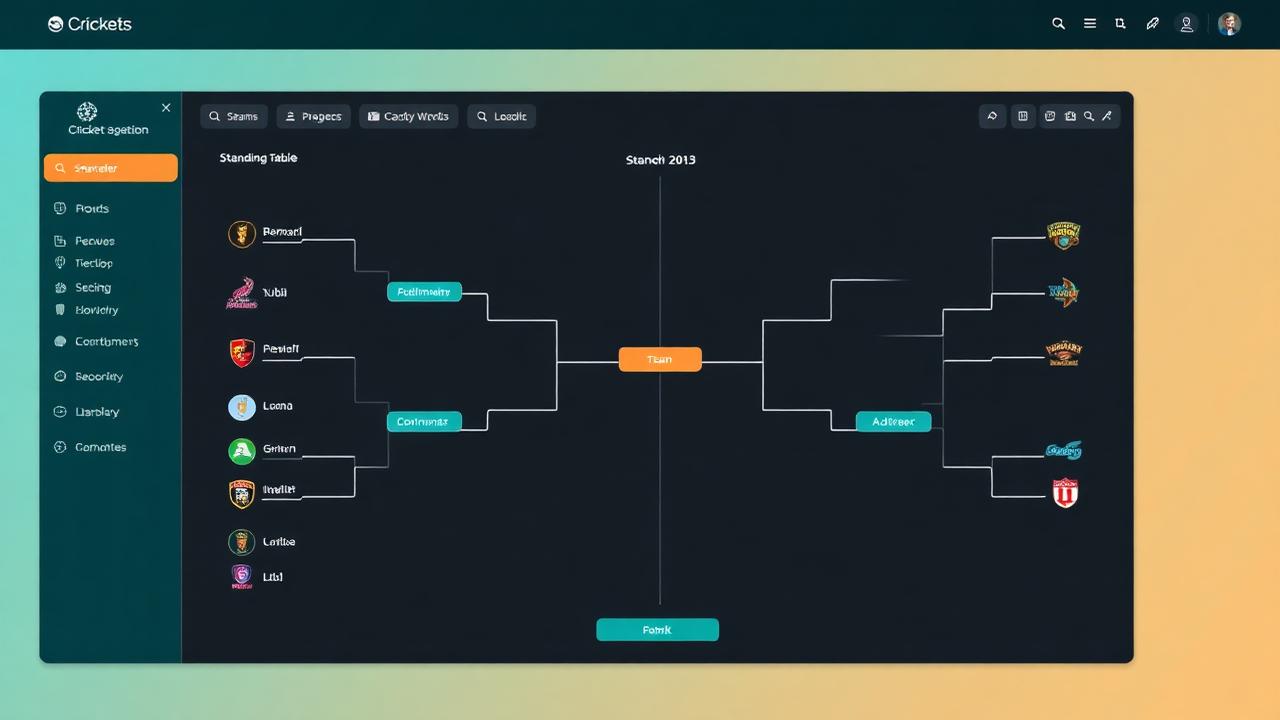
Setting up a balanced tournament schedule can test the patience of any cricket organiser. Using a dedicated double elimination generator ensures every participating squad gets at least two competitive games before facing elimination, removing the heartbreak of traveling for hours only to exit after one bad over. Whether you are running a tape-ball tournament under streetlights, an inter-academy F5 festival, or a corporate T20 weekend league, automated bracket tools take the manual mathematics, seeding headaches, and fixture clashes out of your hands.
Run & Ball provides an offline-capable, mobile-first tournament generator designed specifically for cricket. While traditional tournament bracket software is built for esports or tennis, cricket brings unique challenges like variable overs, pitch availability, tied matches, and complex tournament pathways. This guide breaks down how double elimination brackets work in cricket, how to handle byes and seeding, and how to operate your brackets seamlessly from first ball to the grand final.
Quick answer: What is a double elimination generator?
A double elimination generator is a digital tool that automatically maps teams into two interconnected brackets: the winners' (championship) bracket and the losers' (elimination) bracket.
Every team starts in the winners' bracket. If a team wins, they advance along the upper path. If a team loses their first match, they drop into the losers' bracket rather than going home. A second loss eliminates a team entirely. The champion of the winners' bracket eventually meets the champion of the losers' bracket in the Grand Final. Modern cricket tournament tools automate this progression, updating fixtures, overs, and match timings instantly when scores are entered.
How double elimination brackets work in cricket
Unlike standard round-robin groups that require dozens of fixtures or sudden-death knockouts that punish teams for losing a toss in tricky conditions, double elimination strikes the ideal balance between fairness and time efficiency.
1. The winners' bracket (upper bracket)
All participating teams begin here in Round 1. Winners continue advancing through Round 2, the semi-finals, and into the winners' final. Teams moving through this bracket play fewer games overall to reach the Grand Final, rewarding their undefeated run with more rest and less physical fatigue.
2. The losers' bracket (lower bracket)
When a team drops a match in the winners' bracket, they cross over into the losers' bracket at a designated round. Here, matches are sudden-death: lose once more, and your tournament is over. Winning teams in the lower bracket keep advancing through elimination stages until only one survivor remains to contest the championship.
3. The grand final rules
The climax of the tournament pits the undefeated winner of the upper bracket against the battle-tested winner of the lower bracket. Because the upper-bracket team has zero losses, standard double elimination rules sometimes allow for a "bracket reset" (an immediate second final match if the lower-bracket team wins game one). In recreational and amateur cricket where ground hire and daylight are limited, tournament committees often treat the Grand Final as a single winner-takes-all match.
Why cricket organisers prefer double elimination
Organising a tournament involves managing player fees, team travel, field bookings, and umpire schedules. Sudden-death single knockout often leaves paying teams dissatisfied if weather, coin tosses, or poor light dictate an early exit.
- Guaranteed minimum games: Every registered team is guaranteed at least two matches, making registration fees fair and attractive for traveling teams.
- Reduces fluke outcomes: Cricket is heavily influenced by conditions, coin tosses, and brief individual brilliance. Double elimination ensures one bad over or controversial umpiring decision does not ruin a team's entire campaign.
- Fewer matches than a full round-robin: A round-robin group stage requires significantly more pitch time and scheduling slots. Double elimination delivers a balanced, competitive champion in roughly twice the matches of a single-elimination bracket, saving venue hire costs.
- Natural drama and comeback stories: Teams that stumble in the opening match can find their rhythm, string together three or four consecutive wins through the lower bracket, and reach the final.
Essential features in a double elimination generator
Generic bracket makers often fail when applied to amateur cricket. Cricket organisers require specific features built around the realities of the pitch:
- Offline scoring functionality: In rural grounds, tape-ball street setups, or remote club facilities, cellular data cuts out. Tournament software must allow scorers to enter balls offline and push bracket updates the moment a signal reconnects.
- Flexible over formats: Support for traditional T20, youth T10, 8-over tape ball, and ultra-short F5 matches without breaking schedule timelines.
- Automated crossover seeding: Lower brackets require structured crossover routing so teams who played each other in Round 1 do not immediately rematch in Losers' Round 1.
- Built-in tiebreaker handling: Instant recalculation when rain strikes or matches tie, including boundaries count, Super Overs, or how NRR works.
- Public viewing links: Automated digital brackets that players, team managers, and fans can check from any mobile browser without having to download bloated software.
Step-by-step: How to run a double elimination tournament
Setting up your bracket takes only a few minutes when using Run & Ball. Here is the operational workflow from initial team entries to lifting the trophy.
Step 1: Determine team counts and bracket sizing
Double elimination runs cleanest with powers of two: 4, 8, 16, or 32 teams. If your registration count falls between these numbers (for example, 6, 10, or 12 teams), the generator will allocate first-round byes to top seeds to balance the bracket.
Step 2: Seed the registered teams
Avoid placing the two strongest teams against each other in Round 1. Seed your teams based on previous league performance, regional ranking, or an open draw. High seeds should be matched against lower seeds in opening fixtures so matches naturally become more competitive as rounds progress.
Step 3: Configure venue slots and match durations
Input your ground availability, pitch numbers, and anticipated match duration. A 10-over innings with a short break typically takes 75 minutes. Ensure your scheduling leaves a 10 to 15-minute buffer between games for innings turnovers and warm-ups.
Step 4: Publish fixtures and share live links
Generate the dynamic schedule and share the public tournament link with team captains, scorers, and spectators. Teams will automatically see who they play, which pitch they are assigned to, and what time their match begins.
Step 5: Score matches live and advance brackets
Assign scorers to matches via the Run & Ball mobile app. As each match concludes, the platform updates the score, identifies the winning and losing sides, drops the losing team into their designated lower-bracket match, and schedules the next stage automatically.
Managing byes, bracket math, and scheduling
Understanding bracket mathematics prevents common tournament delays and scheduling bottlenecks.
Calculating total matches
In a double elimination tournament, the total number of matches is calculated as:
- Minimum matches: `(2 * N) - 2` (where N is the number of teams, assuming the upper-bracket winner wins the final)
- Maximum matches: `(2 * N) - 1` (if a bracket reset match is played)
For example, an 8-team cricket tournament requires 14 or 15 matches. If you have two grounds available, you can complete the entire tournament in two days running 4 matches per ground per day.
| Teams | Min Matches | Max Matches | Upper Bracket Rounds | Lower Bracket Rounds |
|---|---|---|---|---|
| :--- | :--- | :--- | :--- | :--- |
| 4 | 6 | 7 | 2 | 3 |
| 6 | 10 | 11 | 3 | 5 |
| 8 | 14 | 15 | 3 | 6 |
| 12 | 22 | 23 | 4 | 8 |
| 16 | 30 | 31 | 4 | 8 |
Handling byes smoothly
When team numbers do not match a power of two, byes are awarded in the opening round. For an 8-team bracket with only 6 teams, the top two seeds receive a bye directly into Winners' Round 2. A properly configured bracket generator places byes so that no team receives two consecutive byes and every team plays before entering an elimination stage.
Pitch management and avoiding rest-time fatigue
The biggest logistical obstacle in double elimination cricket is player fatigue. Lower-bracket teams must play more matches in a shorter time frame to reach the final.
- Stagger upper and lower bracket matches: Run lower-bracket matches on secondary grounds while upper-bracket semi-finals take place on the main pitch.
- Enforce mandatory rest intervals: Give teams dropping down from the upper bracket at least 45 minutes of rest before their elimination match starts.
- Shorten over counts for lower-bracket rounds: If weather or daylight delays the schedule, reduce lower-bracket preliminary games from T12 to T8 to maintain the schedule without canceling fixtures.
Connecting brackets with live scoring and broadcasts
Static paper charts pinned to the club pavilion pavilion wall often result in chaos when matches run long or results are disputed. Moving to digital management brings the whole event to life:
- Ball-by-ball updates: Every ball bowled syncs directly into the tournament dashboard, giving captains live clarity on who they face next.
- Live stream overlays: If you broadcast your matches to YouTube or Facebook, Run & Ball generates real-time graphic overlays displaying current match scores, team badges, and tournament bracket progressions.
- Instant statistics: Player runs, bowling economies, strike rates, and tournament milestones populate player profiles as the bracket progresses.
To get your fixtures organized and run professional knockout or bracket stages, you can start a free tournament → or explore live matches →.
Related reading on Run & Ball
- How to organize a cricket tournament
- Cricket tournament checklist
- How to live stream a cricket match
- How to calculate Net Run Rate
- Open the player directory
Free tournament templates
CSV templates you can open in Excel, Google Sheets or Numbers. Ready-made for round-robin fixtures, points tables with NRR, scorecards and roster sheets.
Manage your next cricket tournament with Run & Ball
- Live ball-by-ball scoring
- Auto fixtures & points table
- Player & team stats
- Free forever
People also ask
Reader comments(0)

Ready to run your next cricket tournament?
Score matches ball-by-ball, run fixtures, points tables and playoffs, and stream to OBS — all free from one phone.
Related articles
- Tournament Generators
Round Robin Tournament Generator for Cricket (Free)
Generate a balanced round-robin cricket fixture for any number of teams in seconds. Free in Run & Ball.
- Tournament Generators
Knockout Tournament Generator for Cricket (Free)
Build a balanced knockout bracket for 4, 8, 16 or 32 cricket teams. Auto-seeding, byes, and shareable bracket image.
- Tournament Generators
League Fixture Generator — Free Tool & Guide | Run & Ball
League Fixture Generator: how Run & Ball gives you a free, mobile-first league fixture generator for clubs, schools, academies and local cricket leagues.
- Tournament Generators
Tournament Bracket Generator — Free Tool & Guide | Run & Ball
Tournament Bracket Generator: how Run & Ball gives you a free, mobile-first tournament bracket generator for clubs, schools, academies and local cricket leagues.
- Tournament Generators
Cricket Match Scheduler — Free Tool & Guide | Run & Ball
Cricket Match Scheduler: how Run & Ball gives you a free, mobile-first cricket match scheduler for clubs, schools, academies and local cricket leagues.
- Tournament Generators
Tournament Draw Generator — Free Tool & Guide | Run & Ball
Tournament Draw Generator: how Run & Ball gives you a free, mobile-first tournament draw generator for clubs, schools, academies and local cricket leagues.