Table of contents
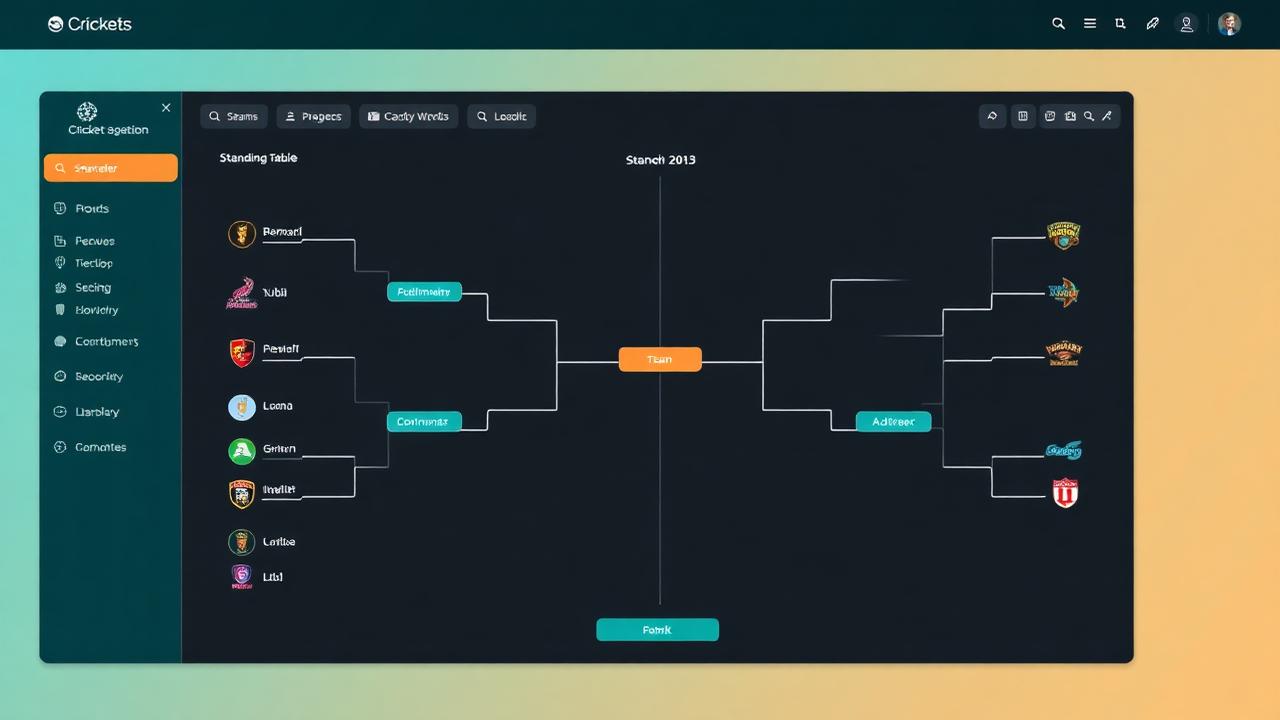
A reliable tournament draw generator is the backbone of any well-run cricket competition. Whether you are setting up an eight-team weekend knockout tournament, organizing a regional tape-ball championship, or scheduling an extended corporate T20 league, generating balanced fixtures by hand is slow and prone to errors. Drawing names out of a hat or wrestling with spreadsheets often leads to scheduling conflicts, lopsided groups, or accidental rematches.
Modern grassroots cricket moves quickly. Organizers need a draw engine that balances competitive fairness, allocates ground slots cleanly, and feeds directly into real-time scoring and standings. Run & Ball offers a free, mobile-first solution built specifically for the realities of local cricket, handling standard club formats alongside gully, tape-ball, F5, T10, and T20 matches.
Quick answer: What does a tournament draw generator do?
A tournament draw generator is an automated tool that takes a registered list of teams, applies seeding or randomization rules, and outputs a structured match schedule. Depending on your chosen format—single elimination, double elimination, round-robin, or multi-stage group play—the generator assigns matchups, calculates byes for uneven team counts, prevents rest-time imbalances, and maps out paths to the final.
---
Why cricket competitions require specialized draw tools
Many generic tournament bracket tools on the web were built for tennis, esports, or chess. While those tools handle basic brackets, cricket presents scheduling challenges that standard bracket makers cannot resolve:
- Match duration and over formats: A 5-over tape-ball match finishes inside 45 minutes, allowing a single pitch to host six games in a day. A 20-over hardball match requires three to four hours. Cricket draw engines must account for pitch turnover and team rest periods.
- Ties, washouts, and table tiebreakers: Drawn games or weather abandonments require points allocations and tiebreaking formulas like Net Run Rate. Understanding how NRR works is critical when group stages feed into knockout brackets.
- Umpire and pitch rotation: In local weekend tournaments, teams often play back-to-back games across adjacent pitches, or losing teams provide square-leg umpires for subsequent fixtures.
- Unbalanced team registrations: Finding exactly 8, 16, or 32 teams rarely happens in local tournaments. Organizers routinely deal with 11, 13, or 19 teams, requiring automated bye calculations that do not give unfair advantages to randomly selected squads.
---
Tournament draw formats explained
Choosing the right format determines your fixture volume, pitch requirements, and total competition duration. A capable draw engine supports four primary tournament structures.
1. Single knockout (Single elimination)
The simplest and fastest format to run. Lose once, and you are out.
- Best for: One-day tape-ball cups, weekend street cricket, and knockout trophies with limited daylight.
- Fixture math: If you have $N$ teams, you will play exactly $N - 1$ total matches. An 8-team draw requires 7 games; a 16-team draw requires 15 games.
- Draw requirements: When team counts do not match powers of two (4, 8, 16, 32), the generator must insert byes in the first round to ensure all subsequent rounds feature even pairings.
2. Round-robin (League stages)
Every team plays every other team in the group once (or twice in home-and-away leagues).
- Best for: Weekend leagues, corporate championships, and club seasons spanning several weeks.
- Fixture math: For a single group of $N$ teams, the total number of matches is calculated as:
$$\text{Total Matches} = \frac{N \times (N - 1)}{2}$$
A 6-team group produces 15 matches. If you run home-and-away fixtures, that doubles to 30.
- Draw requirements: The generator uses a round-robin carousel algorithm so that no team plays two games in one round, and home/away (or batting first/second preference) duties remain balanced.
3. Group stages into knockout playoffs
The standard format used by premier events governed by the ICC official rules and playing conditions, as well as domestic T20 franchises.
- Best for: Multi-day tournaments where teams expect at least two or three guaranteed matches before elimination.
- Structure: Teams are distributed into two or four pools. The top two teams from each pool advance to the semi-finals or a Page playoff system (Qualifier 1, Eliminator, Qualifier 2, Final).
- Draw requirements: The generator must prevent teams from the same preliminary group from meeting in the opening knockout round.
4. Double elimination
Teams remain in contention until they lose two matches. Those who lose in the main bracket drop into a secondary "challengers" bracket.
- Best for: High-stakes weekend competitions where teams travel long distances and want protection against a single bad over or unlucky dismissal.
- Draw requirements: Requires intricate bracket tracking to feed eliminated sides into the lower tier without scheduling duplicate matchups.
---
Step-by-step: How to generate a cricket draw with Run & Ball
Building your tournament draw does not require advanced software skills or complex spreadsheets. Follow this practical workflow to generate and run your schedule.
Step 1: Set up your competition settings
Open the app on your mobile device or web browser. Define your playing format:
- Ball type (tape-ball, hardball, tennis ball)
- Overs per innings (F5, T10, T15, T20, or custom limits)
- Maximum overs per bowler
- Match points (e.g., 2 points for a win, 1 point for a no-result, 0 for a loss)
Step 2: Add your teams and players
Enter team names directly or import player lists. You can link existing player cards to maintain historical performance metrics visible in the player directory. If some captains are still finalizing their squads, you can add placeholder team names (e.g., "Team A" or "Lahore Hawks") and update specific rosters closer to matchday.
Step 3: Choose your draw format and seedings
Select between single knockout, double elimination, pure round-robin, or group stage plus playoffs.
- Seeded draw: Place top-performing teams from prior seasons in opposite brackets so they do not eliminate one another in the opening round.
- Randomized draw: Let the tool shuffle unseeded teams across pools to ensure completely neutral group assignments.
Step 4: Configure grounds, dates, and match slots
Specify the number of available pitches and daily time slots. The fixture engine distributes matches sequentially, ensuring teams receive adequate rest between double-headers and preventing venue double-booking.
Step 5: Publish the schedule and open live tracking
Once you approve the generated draw, hit publish. The tool produces:
- Public web links for players and supporters to check game times.
- Shareable digital brackets and fixture posters for WhatsApp and social media.
- Match scorecards directly integrated into the live match tracker.
---
Managing byes, seeds, and odd team counts
One of the primary reasons organizers switch to a tournament draw generator is the friction caused by odd team numbers. If 11 teams enter a knockout cup, how do you fairly structure round one?
Calculating byes cleanly
To structure a single-elimination tournament, the total number of bracket slots in round one must reach the next highest power of two. For 11 teams, the nearest power of two is 16.
$$\text{Byes needed} = 16 - 11 = 5 \text{ byes}$$
This means:
- Five teams receive an automatic pass (bye) straight into the quarter-finals (Round of 8).
- The remaining six teams play in Round 1, producing three winners.
- The three winners combine with the five bye recipients to form the eight quarter-finalists.
Run & Ball calculates this distribution instantly. You can award byes randomly or allocate them to seeded teams based on their historical tournament rankings.
Balanced group seeding
When running a group stage tournament with 12 teams split into two pools of six, completely random draws can place the three strongest clubs into Group A, creating an unfair "group of death."
By designating top seeds before generating the draw, the system distributes elite sides evenly across pools (e.g., Seed 1 in Group A, Seed 2 in Group B). The remaining positions are filled randomly, maintaining competitive balance throughout the tournament.
---
Live scoring and tournament management in one flow
Generating the fixture list is only half the battle. Once matchday arrives, organizers typically struggle to keep points tables updated, calculate run rates, and notify teams about semifinal seedings.
Because Run & Ball unites draw generation with an integrated match engine, your tournament updates itself dynamically:
- Offline scoring resilience: Local pitches often suffer from patchy cellular reception. Scorers can track balls offline; the moment a signal is detected, the match scorecard, team points, and NRR recalculate automatically.
- Automated playoff qualification: As soon as the final group stage ball is bowled, the tournament engine ranks teams by points, net run rate, and head-to-head records, placing the qualified teams directly into the knockout bracket.
- Live broadcast integrations: Add broadcast-style score bugs to your streaming setup. Learn how to live stream a cricket match with real-time score overlays connected to your draw schedule.
- Complete preparation: Keep your grounds, equipment, and match officials organized using our comprehensive cricket tournament checklist.
---
Compare tournament formats: At a glance
| Format | Minimum Matches per Team | Total Fixture Count (8 Teams) | Venue Requirement | Best For |
|---|---|---|---|---|
| :--- | :--- | :--- | :--- | :--- |
| Knockout (Single Elimination) | 1 match | 7 matches | Low (1 Pitch) | Fast weekend cups, tape-ball sprints |
| Double Elimination | 2 matches | 14–15 matches | Medium (1–2 Pitches) | Competitive club cups, regional qualifiers |
| Round Robin (Single Group) | 7 matches | 28 matches | High (Multiple Pitches/Days) | Long-format leagues, weekend club cricket |
| 2 Groups of 4 + Semis & Final | 3 matches | 15 matches | Medium (1–2 Pitches) | Multi-day festivals, corporate tournaments |
---
Launch your tournament draw today
Eliminate manual scheduling errors, disputed byes, and messy paper scorecards. Set up your teams, generate fair brackets in seconds, and give your local competition a professional feel with ball-by-ball scoring and automated tables.
Start a free tournament → or browse all live matches →.
---
Tournament organization resources
Explore our library of tournament management guides to plan, schedule, and execute smoother cricket competitions:
- Cricket Fixture Generator
- How to Organize a Cricket Tournament
- Cricket Tournament Management System
- Cricket Tournament Software
- Cricket League Management Software
- Cricket Tournament Planner
For broader tournament governance guidelines, refer to international sporting practices detailed on Wikipedia's cricket overview and study historic tournament formats through ESPNcricinfo statistics & records.
Free tournament templates
CSV templates you can open in Excel, Google Sheets or Numbers. Ready-made for round-robin fixtures, points tables with NRR, scorecards and roster sheets.
Manage your next cricket tournament with Run & Ball
- Live ball-by-ball scoring
- Auto fixtures & points table
- Player & team stats
- Free forever
People also ask
Reader comments(0)

Ready to run your next cricket tournament?
Score matches ball-by-ball, run fixtures, points tables and playoffs, and stream to OBS — all free from one phone.
Related articles
- Tournament Generators
Round Robin Tournament Generator for Cricket (Free)
Generate a balanced round-robin cricket fixture for any number of teams in seconds. Free in Run & Ball.
- Tournament Generators
Knockout Tournament Generator for Cricket (Free)
Build a balanced knockout bracket for 4, 8, 16 or 32 cricket teams. Auto-seeding, byes, and shareable bracket image.
- Tournament Generators
Double Elimination Generator — Free Tool & Guide | Run & Ball
Double Elimination Generator: how Run & Ball gives you a free, mobile-first double elimination generator for clubs, schools, academies and local cricket leagues.
- Tournament Generators
League Fixture Generator — Free Tool & Guide | Run & Ball
League Fixture Generator: how Run & Ball gives you a free, mobile-first league fixture generator for clubs, schools, academies and local cricket leagues.
- Tournament Generators
Tournament Bracket Generator — Free Tool & Guide | Run & Ball
Tournament Bracket Generator: how Run & Ball gives you a free, mobile-first tournament bracket generator for clubs, schools, academies and local cricket leagues.
- Tournament Generators
Cricket Match Scheduler — Free Tool & Guide | Run & Ball
Cricket Match Scheduler: how Run & Ball gives you a free, mobile-first cricket match scheduler for clubs, schools, academies and local cricket leagues.