Table of contents
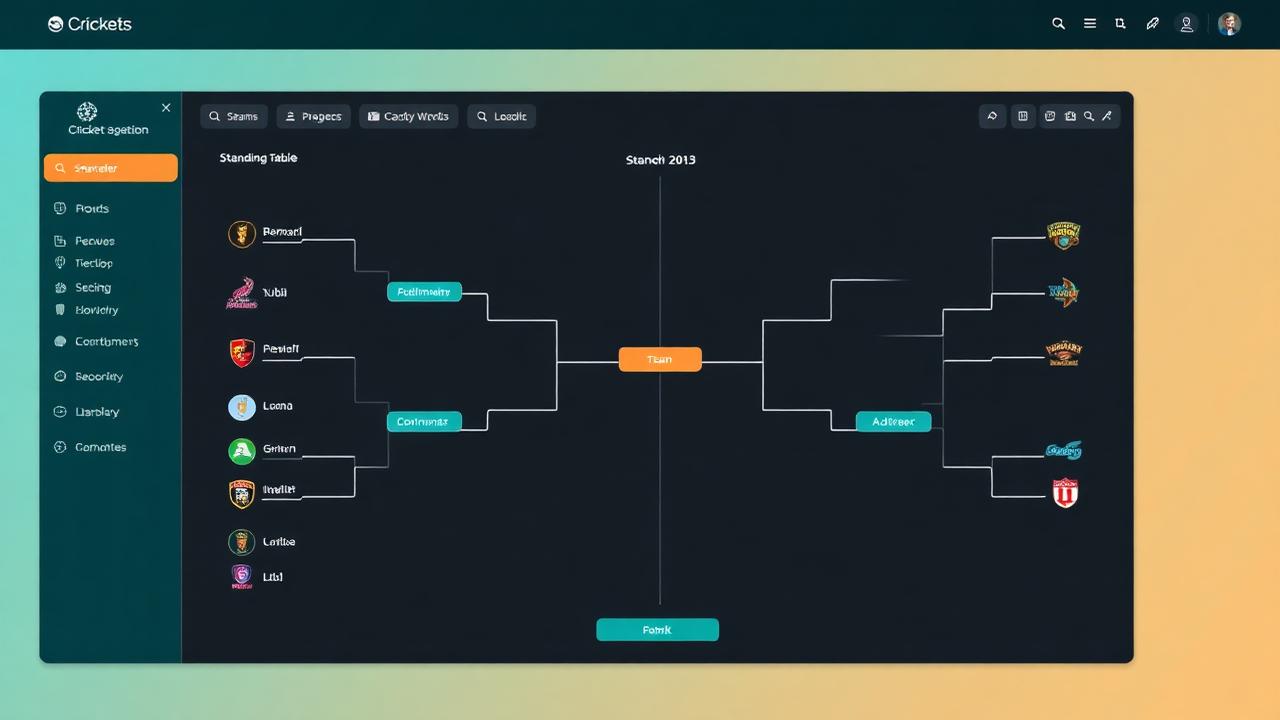
Quick answer: What does modern cricket fixture software do?
Cricket match fixture software automates the complex process of scheduling matches, assigning venues, building tournament brackets, and tracking standings. Instead of juggling manual spreadsheets or dealing with handwritten bracket errors, organizers use digital fixture platforms to balance match distribution, manage rest days between fixtures, and automatically calculate tournament standings with real-time Net Run Rate (NRR).
Run & Ball provides a free, mobile-first cricket match fixture software built for every format—from weekend tape-ball and gully tournaments to multi-division hardball leagues.
Understanding modern cricket match fixture software
Organizing a competitive cricket tournament involves far more than merely picking two teams out of a hat. A single rain delay, ground conflict, or miscalculated tiebreaker can disrupt an entire season. Utilizing dedicated cricket match fixture software ensures that every match date, venue slot, and team pairing is balanced fairly without human scheduling bias.
In traditional club and grassroots setups, tournament administrators frequently spend hours drafting paper brackets or troubleshooting spreadsheet formulas. When a match ends in a blowout or gets interrupted by bad light, organizers must manually rework the entire points table.
Modern fixture platforms solve this by integrating scheduling algorithms directly with ball-by-ball scoring. When a match finishes, the tournament bracket, team records, and standings update instantly across every spectator and player device.
Whether you are coordinating an 8-team tape-ball weekend carnival in Lahore, a corporate league in Dubai, or a season-long club championship across the UK or India, having a specialized scheduling tool is the backbone of smooth operations.
Core tournament structures supported by fixture generators
Different tournament formats require distinct scheduling logic. A robust fixture engine must support everything from direct knockouts to multi-stage league systems without requiring manual recalculation.
1. Round-robin formats (single and double)
In a round-robin schedule, every team plays against every other team in their group either once (single round robin) or twice (home and away).
- Single round robin: If your tournament has 6 teams, the software calculates total matches using the formula $N \times (N - 1) / 2$, which equals 15 matches.
- Double round robin: Common in premier franchise leagues, every team plays each rival twice, ensuring pitch condition bias or toss luck is balanced over time.
- Balanced rest schedules: Quality fixture software ensures no team plays back-to-back matches on the same day while a rival team rests for 48 hours.
2. Knockout and single-elimination brackets
Knockout tournaments deliver high stakes where a single loss eliminates a team.
- Ideal for weekend tournaments, tape-ball cups, and fast-paced F5 or T10 formats where time and ground availability are limited.
- Automated seeding prevents top-ranked teams from clashing in the opening round.
- Bracket progression updates automatically as soon as the final ball is bowled and verified in the scoring app.
3. Group stages with page-playoff systems
Most professional tournaments—including the Indian Premier League and ICC events—use hybrid formats. Teams compete in round-robin groups before moving into seeded playoffs:
- Qualifier 1: Rank 1 vs. Rank 2 (the winner advances straight to the Final).
- Eliminator: Rank 3 vs. Rank 4 (the loser is knocked out immediately).
- Qualifier 2: Loser of Qualifier 1 vs. Winner of Eliminator (determines the second finalist).
High-level fixture software manages these crossover matches automatically once group matches conclude, instantly locking in team slots based on league positions and tiebreak criteria.
4. Double elimination brackets
Often used in community leagues or esports-style cricket formats, double elimination guarantees that a team must lose two matches before being knocked out of title contention. While complex to draw on paper, the software handles the Winners Bracket and Losers Bracket seamlessly.
Step-by-step: How to generate and manage fixtures with Run & Ball
Setting up an entire season or a weekend cup takes only a few minutes. Follow this step-by-step workflow to generate and run your tournament:
Step 1: Set up your tournament profile
Log into Run & Ball on your mobile device or web browser. Enter your tournament name, choose your cricket ball type (tape ball, hardball, tennis, or leather), and select your primary match format (such as T20, T10, 100-ball, or custom over limits).
Step 2: Add participating teams and player rosters
You can quickly create participating teams and paste player names directly into the team roster. If players are already registered on the platform, you can link their existing profiles from the open the player directory section to ensure career stats track continuously.
Step 3: Choose your fixture logic
Select your tournament structure:
- Knockout / Single Elimination
- Round Robin (Group Stage)
- Multi-Group with Super 8 / Knockout playoffs
Specify the number of available grounds, preferred match dates, and start times. The system balances home/away allocations and ensures balanced team recovery periods between fixtures.
Step 4: Score matches ball-by-ball (online or offline)
Assign your scorers. The app handles no-balls, wides, custom tape-ball rules (like penalty runs or batter retirements), and DLS rain calculations. Even if the ground loses internet connectivity completely, scorers can score offline without interruption; the app automatically syncs every ball to the cloud the moment a network connection is detected.
Step 5: Broadcast real-time results and standings
As matches conclude, the standings table updates instantly. Spectators, family members, and players can track live scores from any browser via the live tournament link or browse all live matches right on the platform.
Solving complex match scheduling challenges
Grassroots cricket operations face unpredictable field challenges. Specialized software eliminates these operational bottlenecks:
Automated Net Run Rate (NRR) calculations
Tiebreakers in cricket frequently come down to decimal points in run rates. Calculating NRR manually requires tracking total runs scored across all legal overs faced, minus total runs conceded across all legal overs bowled.
A single manual mistake can mistakenly eliminate the wrong team from semifinal contention. For an in-depth breakdown of the official math, read our full guide on how NRR works.
Ground sharing and venue clashes
Community leagues rarely have the luxury of endless grounds. Often, 12 teams must share two pitches over a single weekend. A dedicated tournament engine allows you to tag specific grounds to specific time windows, ensuring no two games are accidentally slated on the same field at the same time.
Weather interruptions and match rescheduling
Rain delays are part of cricket. When a match is washed out or reduced in overs, the software recalculates target scores using standardized rain rules, including the Duckworth-Lewis-Stern (DLS) method. If a game must be moved to a reserve day, the fixture calendar lets administrators drag and drop fixtures without breaking the rest of the schedule.
Key features to look for in cricket tournament software
When choosing a solution for your league, make sure the platform provides the end-to-end tooling needed before, during, and after matchday:
- Offline-first scoring: Grassroots grounds frequently have weak cellular signals. The scoring module must function completely offline and sync silently when connected.
- Support for local match formats: Ensure the software accommodates non-standard formats like tape ball, gully cricket, F5, and continuous-over indoor tournaments rather than strictly rigid professional formats.
- Live streaming and broadcast overlays: Modern tournaments want professional presentations. Run & Ball offers built-in broadcast overlays that can be piped directly into OBS, YouTube, or Facebook to display live score bugs, batter cards, and wagon wheels.
- Dynamic player career archives: Every match played should add to the batter's and bowler's permanent stats, giving local players the same statistical depth found on professional analytics sites.
Planning your tournament operations
A well-generated fixture list is only one piece of running a smooth event. Proper operational planning ensures teams arrive on time, umpires are briefed, and playing conditions are upheld.
To ensure your tournament goes off without logistical issues, check out our companion guides on how to organize a cricket tournament and our comprehensive cricket tournament checklist.
If you plan to broadcast your matches to an online audience, review our walkthrough on how to live stream a cricket match to set up cost-effective, high-quality streams using nothing more than a smartphone and automated graphic overlays.
Ready to schedule your cricket fixtures?
Eliminate the stress of manual scheduling, broken spreadsheet formulas, and contested points tables. Run & Ball delivers modern, intuitive fixture generation paired with ball-by-ball scoring and professional live sharing—completely free.
Start a free tournament → or explore live matches →.
Official cricket regulations and references
Chennai Chargers
84/3
Overs 9.0 · CRR 9.33
Target 165
Need 81 in 66 balls
RRR 7.36
Free tournament templates
CSV templates you can open in Excel, Google Sheets or Numbers. Ready-made for round-robin fixtures, points tables with NRR, scorecards and roster sheets.
Manage your next cricket tournament with Run & Ball
- Live ball-by-ball scoring
- Auto fixtures & points table
- Player & team stats
- Free forever
People also ask
Reader comments(0)

Ready to run your next cricket tournament?
Score matches ball-by-ball, run fixtures, points tables and playoffs, and stream to OBS — all free from one phone.
Related articles
- Tournament Generators
Round Robin Tournament Generator for Cricket (Free)
Generate a balanced round-robin cricket fixture for any number of teams in seconds. Free in Run & Ball.
- Tournament Generators
Knockout Tournament Generator for Cricket (Free)
Build a balanced knockout bracket for 4, 8, 16 or 32 cricket teams. Auto-seeding, byes, and shareable bracket image.
- Tournament Generators
Double Elimination Generator — Free Tool & Guide | Run & Ball
Double Elimination Generator: how Run & Ball gives you a free, mobile-first double elimination generator for clubs, schools, academies and local cricket leagues.
- Tournament Generators
League Fixture Generator — Free Tool & Guide | Run & Ball
League Fixture Generator: how Run & Ball gives you a free, mobile-first league fixture generator for clubs, schools, academies and local cricket leagues.
- Tournament Generators
Tournament Bracket Generator — Free Tool & Guide | Run & Ball
Tournament Bracket Generator: how Run & Ball gives you a free, mobile-first tournament bracket generator for clubs, schools, academies and local cricket leagues.
- Tournament Generators
Cricket Match Scheduler — Free Tool & Guide | Run & Ball
Cricket Match Scheduler: how Run & Ball gives you a free, mobile-first cricket match scheduler for clubs, schools, academies and local cricket leagues.