Table of contents
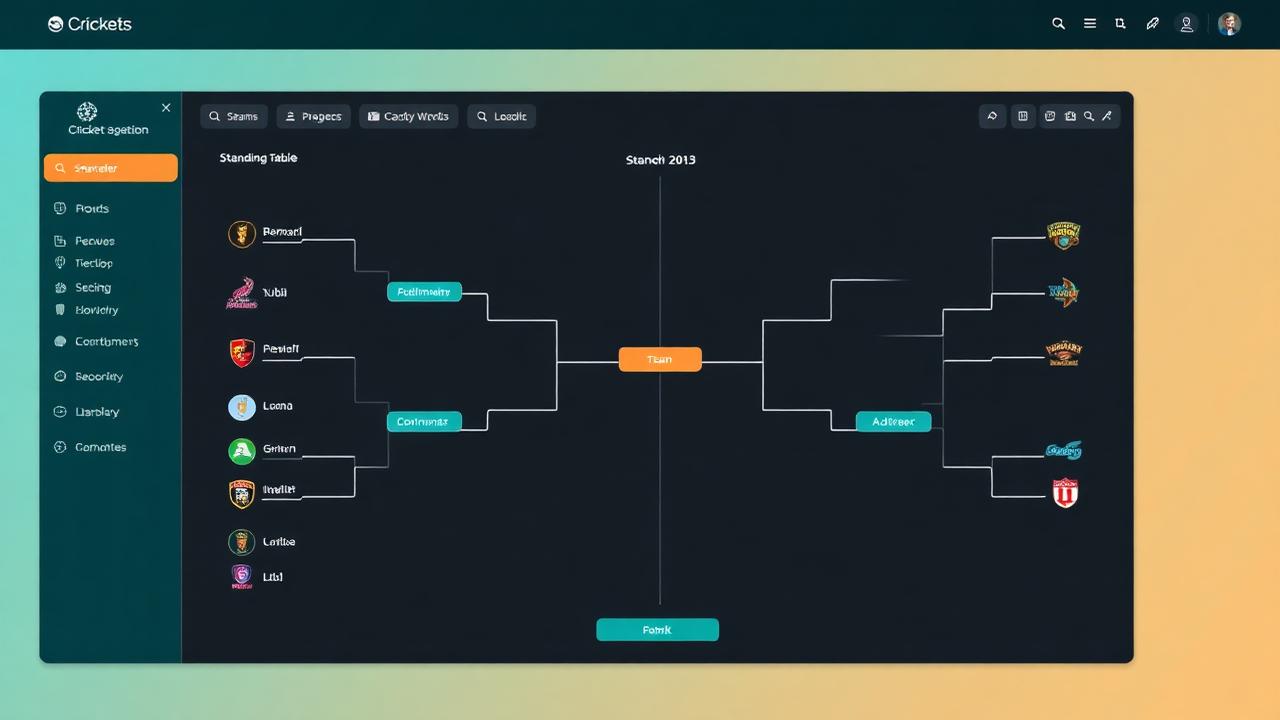
A dedicated fixture maker for cricket takes the chaos out of planning tournaments, letting organizers create balanced schedules, manage grounds, and publish real-time standings without spreadsheet errors. Whether you are running a weekend tape-ball contest, an inter-school knockout, or a month-long corporate league, organizing who plays whom—and when—determines how smoothly your event unfolds.
Using Run & Ball as a modern fixture maker for cricket gives you automated round-robin and knockout scheduling alongside ball-by-ball mobile scoring, automatic Net Run Rate calculations, and broadcast-ready livestream overlays.
Quick Answer: What Is a Fixture Maker for Cricket?
A fixture maker for cricket is an automated scheduling system designed around the unique rules, time constraints, and structures of cricket competitions. Unlike generic tournament bracket generators, a cricket fixture tool accounts for:
- Match lengths ranging from 5-over blitzes (F5) and T10 to T20 and multi-day games
- Ground availability, pitch turnover times, and daylight restrictions
- Rest intervals between back-to-back fixtures for amateur players
- Real-time tournament progression, automatically calculating group standings, tie-breakers, and how NRR works
Instead of manually drawing brackets on paper or wrestling with complex formulas in spreadsheets, organizers input their teams, venues, and format. The software then generates a balanced, conflict-free schedule in seconds.
Why Manual Scheduling Fails for Cricket Tournaments
Cricket scheduling presents logistical hurdles that sports like football or basketball rarely face. Matches are long, weather interrupts play, and pitch deterioration often prevents back-to-back hardball games on the same wicket.
1. Inconsistent Rest Intervals
When organizers build match sheets manually, teams frequently get scheduled for back-to-back games without adequate rest. In hot climates, especially across South Asia and the Gulf, forcing amateur fast bowlers to play twice in four hours leads to fatigue, injuries, and forfeited games. An automated fixture maker ensures minimum rest intervals between matches.
2. Unequal Venue and Time-Slot Distribution
In community leagues, morning slots often offer cooler temperatures and swing-friendly conditions, while midday slots bring intense heat. If one team receives three prime morning fixtures while their rivals play exclusively during peak afternoon heat, disputes inevitably follow. Dedicated software randomizes and balances slot distribution fairly across all participants.
3. Knockout and Playoff Bottlenecks
Rain, tied games, or prolonged overs can delay an entire day's card. When playoff qualification depends on multi-team run-rate margins, manual paper systems grind to a halt while administrators calculate tables. Modern tools update standings ball by ball, populating semifinal slots the moment the final group match finishes.
How an Automated Fixture Maker for Cricket Works
Modern fixture tools replace human error with algorithms that respect cricket regulations. Behind the scenes, the software balances three critical layers:
[Participating Teams & Venues]
             │
             ▼
[Format Engine: Round-Robin / Knockout / Groups]
             │
             ▼
[Constraints: Ground Slots, Rest Periods, Daylight]
             │
             ▼
[Generated Schedule + Live Standings & NRR]
Constraint-Based Match Distribution
The system uses mathematical round-robin algorithms (such as the Berger system or polygon rotation) to guarantee that every team plays every other team once—or twice in a double round-robin—without repeating opposition. It assigns venues sequentially, ensuring teams rotate across grounds rather than remaining anchored to one pitch.
Automated Tie-Breaking and Progression
In group-stage leagues, teams frequently finish level on points. A reliable cricket engine applies standard tie-breaking protocols:
- Total points won
- Total matches won
- Net Run Rate (NRR) derived from total runs scored over total overs faced, compared against runs conceded over overs bowled
- Head-to-head match result between tied teams
Because the schedule connects directly to the scoring engine, quarterfinal, semifinal, and final brackets populate automatically. Once group play concludes, teams receive their playoff fixtures without delays or administrative bias.
Tournament Formats You Can Generate
Different competitions require distinct formats based on calendar length, venue count, and team numbers.
Single Elimination (Knockout)
- Best for weekend cups, corporate festivals, and short tape-ball tourneys
- Every match is decisive; losing teams exit immediately
- Fast, thrilling, and easily scheduled into a single day
- Requires $2^n$ teams (e.g., 4, 8, 16, 32) or a system of first-round byes
Round-Robin (All-Play-All)
- Best for long-format club leagues and academy tournaments
- Fair, comprehensive evaluation: the best team wins over a sustained series
- Formula for total games: $\frac{N(N-1)}{2}$ where $N$ is the number of teams
- Demands substantial ground availability and strict calendar management
Group Stage into Knockout (World Cup Style)
- Teams split into pools (e.g., two groups of four or four groups of four)
- Top two teams per group advance to quarterfinals or semifinals
- Guarantees every participating team a minimum of 3 to 4 matches
- Shields marquee teams from elimination after a single unlucky performance
Page Playoff System (IPL / T20 League Model)
- Used after a round-robin phase to give top finishers an earned advantage
- Qualifier 1: 1st place plays 2nd place (winner reaches final)
- Eliminator: 3rd place plays 4th place (loser exits)
- Qualifier 2: Loser of Qualifier 1 plays Winner of Eliminator
- Final: Winner of Qualifier 1 plays Winner of Qualifier 2
Step-by-Step: How to Build a Cricket Fixture Schedule
Setting up your tournament on Run & Ball takes just a few minutes. Here is the operational workflow from setup to first ball.
Step 1: Define Tournament Rules and Conditions
Before entering names, outline your tournament parameters:
- Format: Tape ball, gully, leather ball, T20, T10, or custom over limits
- Over rules: Maximum overs per bowler, powerplay boundaries, and wide/no-ball runs
- Venue allotment: How many pitches are available simultaneously?
- Time allocations: Expected match duration plus a 20-minute innings turnover window
Step 2: Register Teams and Rosters
Collect your squad lists. In Run & Ball, you can paste team lists or add rosters individually. Each team gets a profile page where their historic stats, player forms, and team details live throughout the competition.
Step 3: Choose Format and Generate Fixtures
Head to the tournament generator:
- Select your tournament model (Knockout, Round-Robin, or Groups).
- Assign available grounds and match date windows.
- Tap generate. The algorithm compiles the full card, ensuring no squad is booked for simultaneous matches or forced into back-to-back games without rest.
Step 4: Review, Adjust, and Publish
Review your generated schedule. If ground maintenance or local weather requires moving an evening game to the morning, adjust the fixture with a single tap. Once finalized, hit publish to produce a public schedule link that captains, players, and fans can view instantly.
Step 5: Score Matches and Track Live Standings
Assign scorers for each ground. Scorers track action ball by ball using the mobile interface—which operates completely offline if venue internet drops. The moment connection returns, scores sync with the server, updating the live scoreboard, player records, and Net Run Rate standings in real time.
Critical Considerations for Cricket Fixture Planning
Experienced tournament directors look beyond simple team pairings. Building an exceptional cricket tournament requires attention to realistic playing conditions.
Accounting for Weather and Daylight
Unless you play under professional floodlights, natural light dictates playing hours. In winter across the subcontinent, visibility deteriorates rapidly after 4:30 PM. A fixture that starts 20 minutes late can easily result in a match abandoned for bad light. Always leave a 30-minute buffer between games to account for prolonged over rates, DRS disputes, or innings breaks.
Bowler Workload and Recovery
In short-format tape-ball tournaments, fast bowlers frequently bowl at full speed across multiple matches in a single day. If your tournament features F5 or T10 games on one weekend, schedule an hour of rest between games for any team playing twice on the same day.
Pitch Care and Ground Swapping
Hardball matches take a heavy toll on turf wickets. Scheduling four consecutive 20-over matches on a single pitch can degrade the surface into an uneven, dangerous track for evening batters. Rotate games across adjacent wickets when organizing multi-pitch grounds.
Beyond the Schedule: Live Scoring and Streaming
A fixture schedule is only useful if players and spectators can track what happens. Run & Ball links tournament scheduling directly to digital scoring and broadcasting tools:
- Offline-First Scoring: Network drops at rural grounds will never interrupt a match. The scorer keeps operating, and the data syncs when connectivity returns.
- Broadcast-Ready Overlays: Stream your tournament on YouTube, Facebook, or OBS with live graphics that match television productions—displaying batter stats, required run rates, and tournament brackets.
- Automated Match Summaries: Generate shareable result graphics, player of the match posters, and match highlights to publish directly to social media.
When your fixture schedule links directly to scoring, captains stop calling organizers to ask about playoff scenarios or NRR requirements. The answers are visible to everyone in real time.
Recommended Tournament Management Resources
To refine your tournament planning and execution, consult these operational guides:
- Cricket Fixture Generator: Deep dive into automated scheduling tools and bracket design.
- Cricket Tournament Management System: Complete administrative workflows for leagues and clubs.
- How to Organize a Cricket Tournament: Step-by-step master plan from sponsorships to match-day logistics.
- Cricket Tournament Checklist: Comprehensive equipment, safety, and operational rundown.
- Cricket Tournament Software: Evaluating digital platforms for grassroots tournaments.
- Cricket League Management Software: Managing season-long multi-division competitions.
- Cricket Tournament Planner: Structuring dates, venues, and administrative timetables.
- How to Calculate Net Run Rate: Formulas and worked examples for tournament tables.
- How to Live Stream a Cricket Match: Turn mobile phones and OBS into television-style broadcasts.
You can also start a free tournament, browse all live matches, or explore player records in the player directory.
Free tournament templates
CSV templates you can open in Excel, Google Sheets or Numbers. Ready-made for round-robin fixtures, points tables with NRR, scorecards and roster sheets.
Manage your next cricket tournament with Run & Ball
- Live ball-by-ball scoring
- Auto fixtures & points table
- Player & team stats
- Free forever
People also ask
Reader comments(0)

Ready to run your next cricket tournament?
Score matches ball-by-ball, run fixtures, points tables and playoffs, and stream to OBS — all free from one phone.
Related articles
- Tournament Generators
Round Robin Tournament Generator for Cricket (Free)
Generate a balanced round-robin cricket fixture for any number of teams in seconds. Free in Run & Ball.
- Tournament Generators
Knockout Tournament Generator for Cricket (Free)
Build a balanced knockout bracket for 4, 8, 16 or 32 cricket teams. Auto-seeding, byes, and shareable bracket image.
- Tournament Generators
Double Elimination Generator — Free Tool & Guide | Run & Ball
Double Elimination Generator: how Run & Ball gives you a free, mobile-first double elimination generator for clubs, schools, academies and local cricket leagues.
- Tournament Generators
League Fixture Generator — Free Tool & Guide | Run & Ball
League Fixture Generator: how Run & Ball gives you a free, mobile-first league fixture generator for clubs, schools, academies and local cricket leagues.
- Tournament Generators
Tournament Bracket Generator — Free Tool & Guide | Run & Ball
Tournament Bracket Generator: how Run & Ball gives you a free, mobile-first tournament bracket generator for clubs, schools, academies and local cricket leagues.
- Tournament Generators
Cricket Match Scheduler — Free Tool & Guide | Run & Ball
Cricket Match Scheduler: how Run & Ball gives you a free, mobile-first cricket match scheduler for clubs, schools, academies and local cricket leagues.