Table of contents
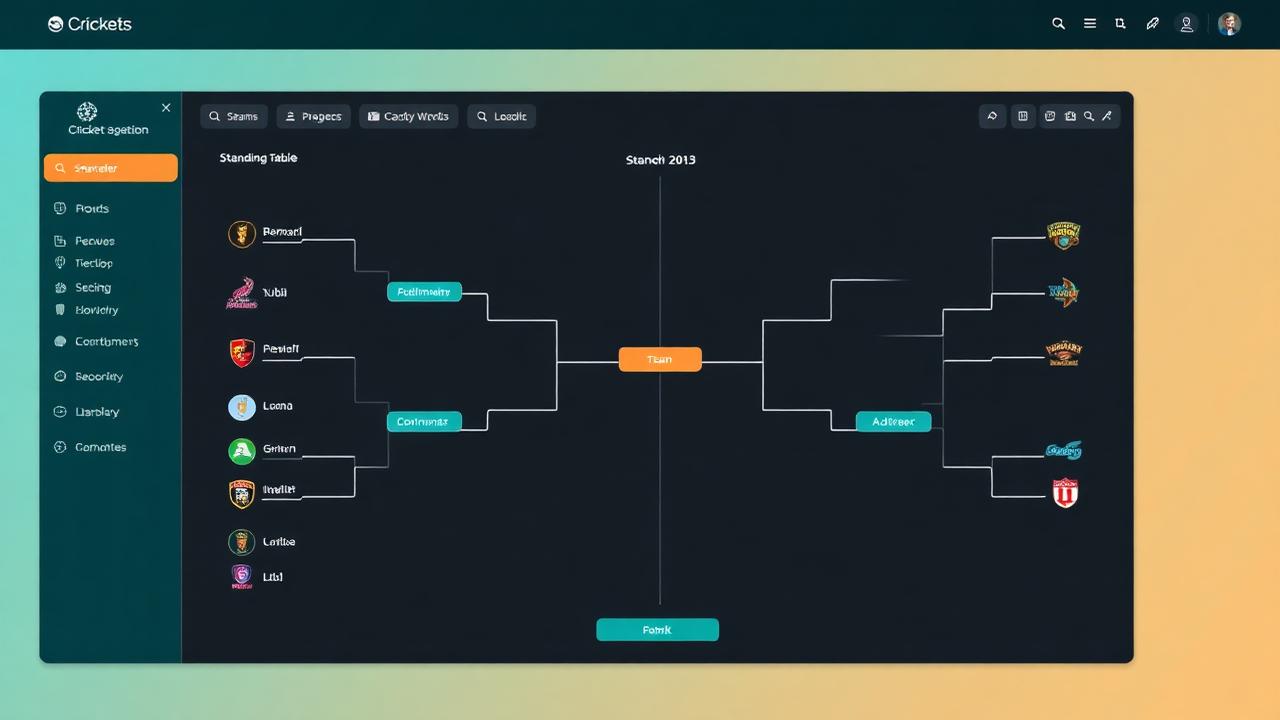
Setting up fixtures for a weekend league, tape-ball festival, or multi-week club competition often begins with great enthusiasm and quickly descends into logistical chaos. Using a dedicated tournament schedule maker removes the headache of juggling venue conflicts, double-bookings, team rest periods, and tie-breaker arithmetic. Whether you are running an 8-team neighborhood gully contest or a 32-team corporate championship, having a digital scheduler ensures your fixtures run smoothly from opening ball to the final trophy presentation.
Run & Ball provides a modern, mobile-first tournament schedule maker built specifically for the realities of local cricket across Pakistan, India, the UAE, and worldwide. From short tape-ball overs to standard hardball tournaments, generating balanced fixtures and publishing live standings takes minutes instead of hours.
Quick answer: What is a tournament schedule maker?
A tournament schedule maker is a digital system that automates the creation of match fixtures, ground allocations, and match-day timing for competitive sports.
In cricket, a tournament schedule maker must do far more than simply pair Team A with Team B. It must balance home-and-away slots, allocate shared grounds, manage morning versus afternoon time blocks, prevent back-to-back fatigue for players, and feed results straight into an automated standings table with Net Run Rate (NRR) calculations. Instead of manually editing printed spreadsheets whenever rain interrupts play, modern software recalculates schedules and updates all participating teams in real time.
Why manual cricket scheduling breaks down
Organizing club cricket fixtures on paper or standard spreadsheets almost always runs into friction. Cricket poses unique operational challenges that generic bracket software cannot resolve:
- Variable match lengths: A T10 match takes roughly 90 minutes, whereas a 40-over club fixture can stretch past five hours. When schedules do not account for innings breaks, changeovers, and ball searches, entire game days fall behind.
- Venue limitations: Most local competitions share one or two pitches across multiple clubs. Staggering matches across limited grounds requires precise time-slot management.
- Player availability and rest: Teams often play doubleheaders during weekend tournaments. Scheduling back-to-back games without adequate rest leads to player fatigue and injury risks.
- Rain delays and pitch sharing: A single shower can push morning fixtures into afternoon time slots. Rebuilding an entire weekend schedule by hand when daylight is fading is a nightmare for organizers.
- Complex standings arithmetic: When pool stages conclude, sorting qualification spots requires precise calculations. Working out who advances via head-to-head records or Net Run Rate by hand creates disputes.
When you use dedicated software like the tools within Run & Ball's ecosystem, these variables are configured automatically before the first delivery is bowled.
Popular cricket tournament formats explained
Choosing the right structure is the first step in scheduling your competition. Your format determines how many total matches are needed, how long the event will run, and how teams qualify for the knockout phase.
Round robin leagues
In a round-robin schedule, every team plays every other team in the group at least once.
- Best for: Long-running seasonal leagues, weekend club cricket, and divisions where every squad expects guaranteed playing time.
- Math formula: For a group of $N$ teams, total matches equal $N \times (N - 1) / 2$. An 8-team single round robin requires 28 matches.
- Advantage: Eliminates the risk of a strong team being knocked out after a single bad over. Points tables naturally sort out the most consistent sides.
Single elimination (Knockout brackets)
The purest, high-stakes tournament format: the loser of each match is immediately eliminated, while the winner advances to the next round.
- Best for: Fast-paced weekend tournaments, tape-ball festivals, and cup competitions with limited pitch availability.
- Math formula: An $N$-team knockout tournament requires exactly $N - 1$ matches to crown a champion. A 16-team tournament takes 15 matches.
- Advantage: Fast, exciting, and demands fewer ground bookings. However, half the participating teams go home after playing just one game.
Group stages into playoffs (IPL / World Cup format)
The global gold standard for professional cricket leagues combines round-robin pools with knockout finals. Teams are divided into two or more groups, play a set of preliminary fixtures, and top teams advance to quarterfinals, semifinals, or an Indian Premier League-style Page playoff system (Qualifier 1, Eliminator, Qualifier 2, Final).
- Best for: Medium to large tournaments spanning multiple weekends where teams expect multiple guaranteed matches alongside an electrifying knockout climax.
- Advantage: Gives room for early-tournament slip-ups while rewarding top-seeded group winners with an extra life in the playoff rounds.
Double elimination
In double elimination brackets, a team must lose two matches before being knocked out of the competition. Teams that lose in the main bracket drop into a secondary "challengers" bracket.
- Best for: Short weekend championships where travel costs are involved, ensuring that traveling squads never get sent home on an unlucky first-round dismissal or bad coin toss.
Key features to look for in a cricket tournament schedule maker
Not all tournament generators handle cricket well. Many tools on the web are built for football or basketball, where draws are common and matches have static clocks. When evaluating a scheduler for cricket, ensure it supports these crucial capabilities:
Automated Net Run Rate (NRR) calculations
In limited-overs cricket, points alone rarely separate top contenders. Ties on points are universally broken by Net Run Rate. Calculating NRR requires logging the total runs scored across all overs faced, divided by total overs, subtracted by the runs conceded per over bowled.
A reliable tournament schedule maker links live match scoring directly to the league standings table. The moment a scorer hits "Match Ended" on their phone, the points table adjusts automatically. If you want to understand the exact mathematical principles behind tie-breakers, review our breakdown on how to calculate net run rate.
Offline scoring and instant cloud sync
Local grounds, municipal parks, and rural turf wickets often suffer from patchy cellular reception. If your fixture maker relies entirely on continuous high-speed data, your scorers will get locked out midway through an innings. Run & Ball operates offline-first: score ball-by-ball without internet connectivity, and the platform automatically syncs the results, scorecard, and table points as soon as you reconnect to a network.
Multi-format support: From gully to multi-day
Grassroots cricket takes many forms. A proper scheduler accommodates standard T20s, 40-over league matches, short-boundary F5 (5 overs) tape-ball blasts, and T10 fixtures. Each format demands different ground slot durations, ball-type tracking, and batting rules (such as mandatory retirements or last-man-standing rules).
Venue conflict and slot detection
If your tournament shares two pitches across ten teams, manual planning easily leads to accidental overlap. An intelligent generator alerts you if Team C is scheduled to play on Pitch 1 while their opening bowler is still fielding on Pitch 2. It also builds in mandatory switchover buffers so that the toss, pitch sweeping, and warmups happen on time.
Integrated digital features
Modern cricket tournaments want more than printed bracket charts taped to a clubhouse wall. Look for systems that supply:
- Real-time score links for spectators viewing from home (browse all live matches to see how live data looks).
- Individual records and milestone tracking via an open player directory.
- Seamless setup for social streaming. Discover how to live stream a cricket match with automated broadcast-grade graphics overlays generated directly from your live fixtures.
Step-by-step: How to build a complete cricket schedule
Setting up your competition does not have to be intimidating. Follow this straightforward step-by-step process to generate an airtight schedule.
Step 1: Establish your tournament parameters
Before touching software, finalize your operational constraints:
- Total participating teams.
- Available match days, start times, and venue curfews.
- Number of grounds available simultaneously.
- Overs per match (e.g., 6 overs for tape-ball, 20 overs for standard club matches).
- Expected match duration (allow 100 minutes for T10, 3.5 hours for T20, including changeovers).
For a complete breakdown of administrative requirements—from umpire hiring to boundary ropes—refer to our how to organize a cricket tournament playbook and the comprehensive cricket tournament checklist.
Step 2: Input teams and seedings
Open the scheduler, create your tournament profile, and enter team names. If you already know your top contenders, assign seedings to keep the best clubs from knocking each other out on day one. Run & Ball allows you to paste team rosters directly, saving hours of data entry.
Step 3: Select your bracket style and let the engine build fixtures
Select your preferred competition model:
- Round Robin (Single or Double)
- Knockout / Single Elimination
- Group Stage + Semis/Finals
- Double Elimination
Click generate. The scheduling engine pairs teams, balances home and away designations, and spaces out match assignments across your available venues.
Step 4: Review rest gaps and ground allocations
Inspect the generated matrix. Ensure no team is scheduled for a morning fixture on Pitch 1 followed immediately by a mid-day clash across town. If weather cuts short a session, use the schedule manager to adjust match times or swap dates with a single tap.
Step 5: Publish live links to captains and supporters
Ditch printed PDFs that become outdated after the first delayed match. Share your dynamic tournament link. Captains, players, and family members can open the URL on their mobile browsers to view upcoming match timings, ground directions, live scorecards, and updated group standings.
To explore real-world community events or start your own bracket, you can start a free tournament anytime.
Managing match-day disruptions and rain delays
Even the most meticulously built tournament schedule faces unexpected disruptions. Preparing for these incidents in advance keeps your competition running smoothly.
Weather interruptions and DLS
When rain limits game time, reducing overs evenly preserves fairness. Official international guidelines are established under the ICC official rules and playing conditions. For local grassroots organizers, using software with built-in Duckworth-Lewis-Stern (DLS) or average run rate adjustments ensures target revisions are calculated accurately without heated pitch-side debates.
Forfeits and walkovers
If a team fails to field seven or eight players at the scheduled toss time, tournament regulations should define the forfeit window (usually 15 to 30 minutes after the scheduled start). A dedicated schedule maker lets you award the points to the opposing side and record an automatic forfeit win without corrupting the broader tournament bracket or NRR math.
Super overs and boundary counts
Knockout cricket cannot end in a draw. Ensure your tournament rules clearly specify how deadlocks will be resolved. While historical records found on ESPNcricinfo statistics & records and general overviews of cricket on Wikipedia show various methods like coin tosses or boundary counts, modern cricket universally uses the Super Over. When a Super Over is completed, your tournament tool should seamlessly ingest the extra over into the main match ledger.
Choosing the right software ecosystem
A tournament schedule maker should not sit isolated from the rest of your cricket operations. Match fixtures, live ball-by-ball scoring, umpire administration, spectator engagement, and trophy calculations are part of one continuous workflow.
Organizers looking to scale their leagues often begin with scheduling and quickly discover that unified management software saves dozens of hours every weekend. Explore how modern systems integrate fixture generation with wider league operations:
- Read about end-to-end tournament tools in our guide to cricket tournament software.
- Understand league-wide administrative architecture with our overview of a complete cricket tournament management system.
- Run multi-month, multi-division structures using cricket league management software.
- Focus specifically on round-robin algorithms with our dedicated cricket fixture generator guide.
- Master overall season preparation through our cricket tournament planner walkthrough.
By replacing disjointed spreadsheets with a purpose-built cricket scheduling engine, you spend less time solving logistics disputes and more time enjoying the action out in the middle. Run & Ball delivers the tools you need to build balanced fixtures, track every run, and deliver a professional tournament experience to every cricketer in your community.
Free tournament templates
CSV templates you can open in Excel, Google Sheets or Numbers. Ready-made for round-robin fixtures, points tables with NRR, scorecards and roster sheets.
Manage your next cricket tournament with Run & Ball
- Live ball-by-ball scoring
- Auto fixtures & points table
- Player & team stats
- Free forever
People also ask
Reader comments(0)

Ready to run your next cricket tournament?
Score matches ball-by-ball, run fixtures, points tables and playoffs, and stream to OBS — all free from one phone.
Related articles
- Tournament Generators
Round Robin Tournament Generator for Cricket (Free)
Generate a balanced round-robin cricket fixture for any number of teams in seconds. Free in Run & Ball.
- Tournament Generators
Knockout Tournament Generator for Cricket (Free)
Build a balanced knockout bracket for 4, 8, 16 or 32 cricket teams. Auto-seeding, byes, and shareable bracket image.
- Tournament Generators
Double Elimination Generator — Free Tool & Guide | Run & Ball
Double Elimination Generator: how Run & Ball gives you a free, mobile-first double elimination generator for clubs, schools, academies and local cricket leagues.
- Tournament Generators
League Fixture Generator — Free Tool & Guide | Run & Ball
League Fixture Generator: how Run & Ball gives you a free, mobile-first league fixture generator for clubs, schools, academies and local cricket leagues.
- Tournament Generators
Tournament Bracket Generator — Free Tool & Guide | Run & Ball
Tournament Bracket Generator: how Run & Ball gives you a free, mobile-first tournament bracket generator for clubs, schools, academies and local cricket leagues.
- Tournament Generators
Cricket Match Scheduler — Free Tool & Guide | Run & Ball
Cricket Match Scheduler: how Run & Ball gives you a free, mobile-first cricket match scheduler for clubs, schools, academies and local cricket leagues.